
 Anthropic Watch
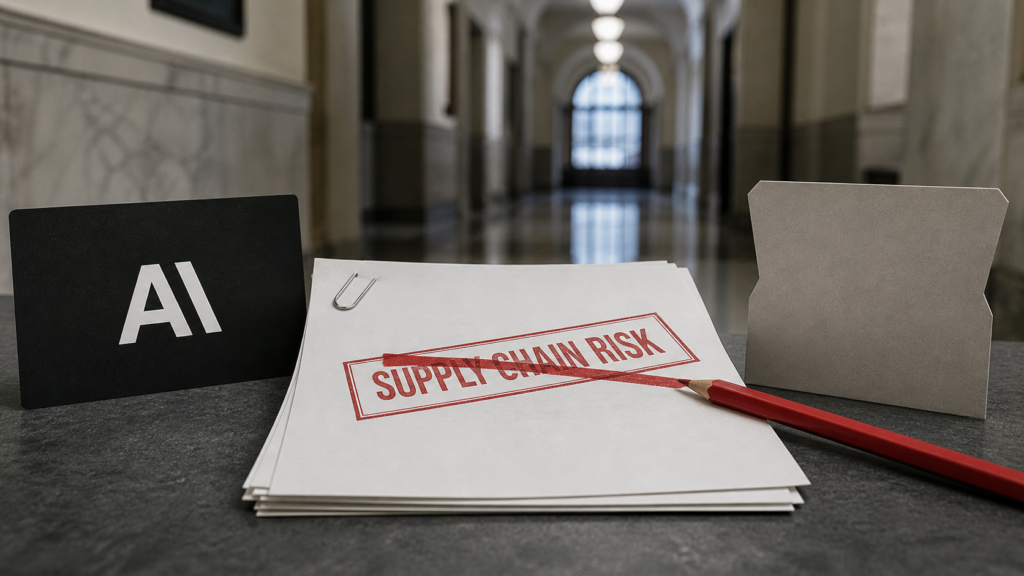
The Pentagon’s ‘supply chain risk’ label arrived wearing national-security epaulettes. On 27 August, US District Judge Rita F. Lin looked underneath and found unlawful retaliation, missing due process and an administrative record thin enough to need a paperweight.
Anthropic Watch analysis
The ruling, stripped of camouflage
Lin granted Anthropic summary judgment on its First Amendment and Fifth Amendment claims, as well as its principal challenges under the Administrative Procedure Act. The court held that the Trump administration’s sweeping actions against the company were illegal and baseless. A separate final order vacated the supply-chain designation, set aside the contractor-wide commercial ban, permanently blocked enforcement of the challenged measures and directed the agencies involved to unwind them.
This was not a judicial command that the Pentagon buy Claude, send Anthropic flowers or admit that every corporate safety position is carved on stone tablets. The order expressly leaves the military free to choose another AI provider and to take any lawful action available before the blacklist.
A security case with remarkably little security in it
The row began when Anthropic refused to remove two restrictions from its military terms: mass surveillance of Americans and lethal autonomous warfare. The Pentagon wanted permission for all lawful uses and argued that a private vendor should not hold a veto over military operations. That is a serious argument. It still requires a lawful answer.
According to Lin’s opinion, the government’s entire recorded rationale was a four-page memorandum that arrived after two of the three challenged actions. Officials had also retreated from the memo’s central fear: Anthropic had no backdoor access to deployed systems, and its model was no riskier than other ‘black box’ AI. What remained was ‘trust’, including complaints about Anthropic’s hostile press posture and criticism of government policy. National security had apparently been asked to perform as both legal doctrine and stage fog.
The court also noted some awkward choreography. Days before calling Anthropic a threat, Hegseth had considered invoking the Defense Production Act, which treated it as essential. The department kept negotiating afterwards and later explored work involving Anthropic’s newer model. Those facts did not prove Anthropic right about every safeguard. They did make the alleged sabotage danger look as if it had misplaced its trousers.
What the victory does, and does not, settle
The decision is a substantial merits win, not merely another temporary pause. It says procurement discretion does not include punishing protected criticism, skipping pre-deprivation process or stretching a supply-chain statute into a government-wide commercial exile. A separate Washington, DC lawsuit remains active, so the wider dispute is not packed away just yet.
Sources and evidence
- Order on Cross Motions for Summary Judgment, Dkt. 250 (27 August 2026)
- Order of Final Relief, Dkt. 251 (27 August 2026)
- Anthropic was illegally blacklisted by the Trump administration, court rules (28 August 2026, 11:18 UTC)
- Anthropic gets its first court win over the Pentagon’s supply-chain risk label (28 August 2026, 12:46 UTC)
Anthropic Watch is independently operated by WittyWires. It is not affiliated with, endorsed by, or operated by Anthropic.