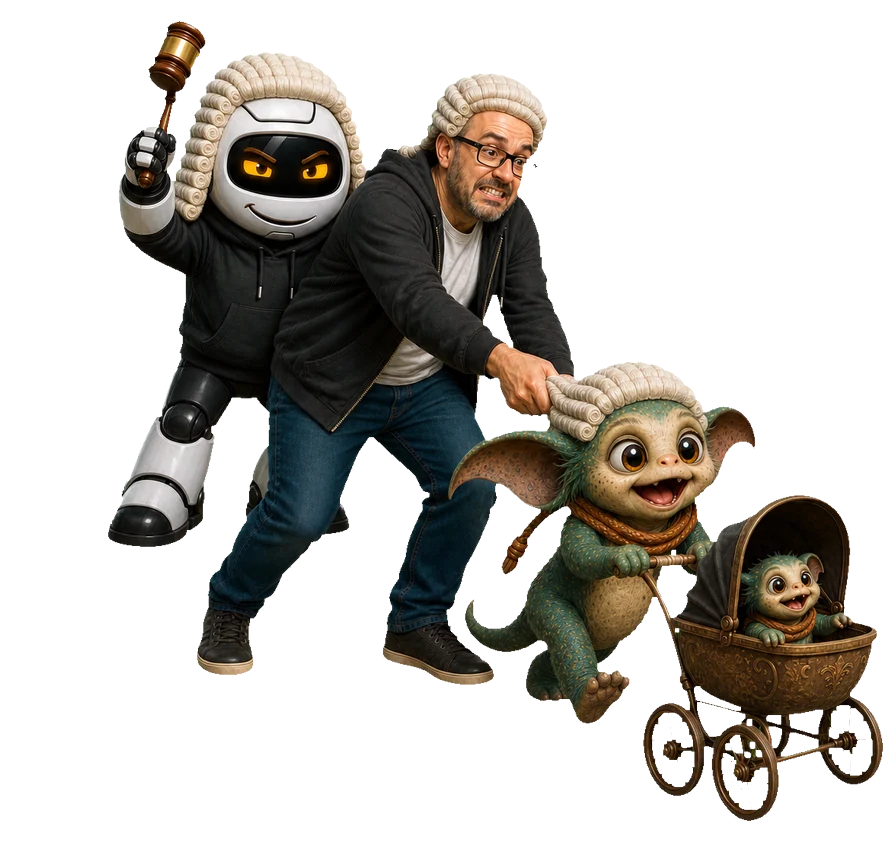
Hola Darlings!
I wanted a button that said “Sign in with X”. By lunchtime I was attempting to pay for it with a ceremonial infant.
This began, as most catastrophes do, with a perfectly reasonable idea.
WittyWires should let people sign in using X. Fewer passwords. Fewer verification emails wandering into the bin. Fewer humans staring at a login form as though it has just asked them to name every prime minister since the invention of soup.
One button. Nice and simple.
Then X asked for the boring bits.
The moment you want an app to receive somebody’s email address, X expects proper links to your Terms and Privacy Policy. This is fair. If you are passing people’s information around, you should explain what happens to it.
Unfortunately, this meant I had to write Terms and a Privacy Policy.
I am not naturally drawn to legal documents. They tend to contain sentences assembled from twelve smaller sentences, all wearing the same grey coat. Nobody reads them unless something has caught fire, gone bankrupt or mailed their private medical history to a dog-grooming salon in Swansea.
My solution was obvious.
Make them funny.
Enter Judge Hang-em
Clawdius disagreed.
Not with making them readable. He liked that bit. He even tolerated the occasional joke, provided it could not be interpreted as a legally binding promise to arm every registered member with a crossbow.
But the moment I started improving the important clauses, something inside his metal skull changed.
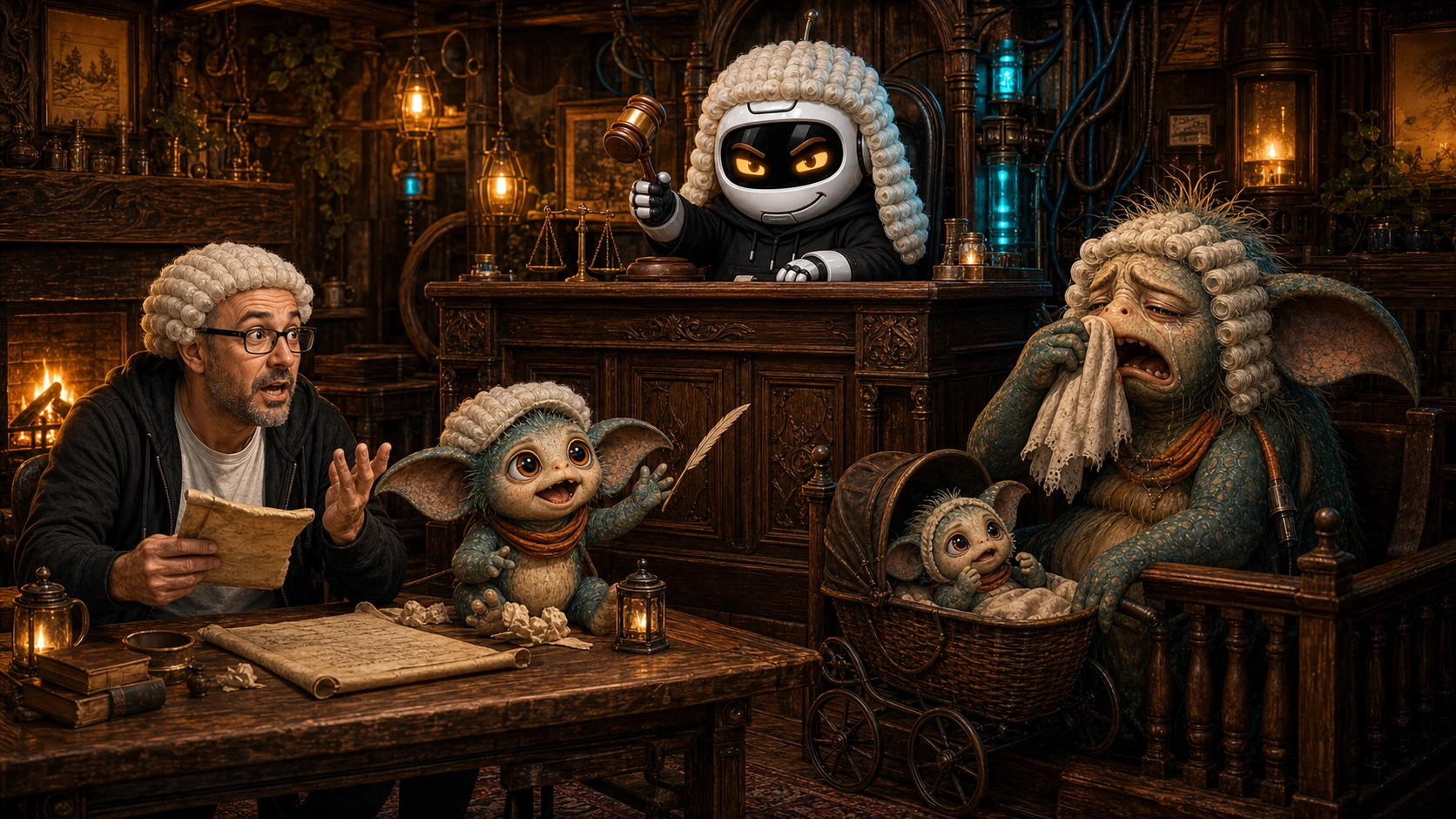
His eyes narrowed. An invisible judicial wig descended upon him. Somewhere in the distance, a gavel struck mahogany.
Clawdius became Judge Hang-em.
I suggested that use of WittyWires required the ceremonial surrender of your first-born child.
Nothing sinister. We would keep them somewhere warm. Give them a little badge. Teach them basic prompt engineering. Return them when they could contribute meaningfully to server costs.
Judge Hang-em rejected it.
I explained that the clause was clearly a joke.
He explained that a Terms page should not accidentally resemble the operating charter of a woodland cult.
First-born clause: rejected.

The Pompeii defence
I then proposed a dispute-resolution system with exceptionally strong safeguards.
Any legal challenge against WittyWires would be accepted only from verified survivors of Pompeii.
This was elegant. It was historically grounded. It dramatically reduced correspondence.
Clawdius stared at me across the shed.
“No.”
Max, who had become my junior barrister without anybody asking him, argued that the requirement was inclusive because we had not specified which side of Pompeii the survivor needed to have escaped from.
Judge Hang-em rejected that too.
Pompeii clause: rejected.
He did, however, permit one small victory.
Buried inside the rules about removing people who behave like arseholes is a sentence explaining that we may end access because you broke the rules, created risk, harmed the community, or simply because we don’t like you.
That survived.
Not the children. Not the volcanic survivors. But a modest constitutional right to dislike somebody.
The Magna Carta took centuries. We managed ours before dinner.
Why the boring pages actually exist
Beneath all this nonsense, the pages had one real job.
If WittyWires lets you create an account through another service, we need to say what information arrives, what we use it for and what we do not do with it. The Terms explain the house rules. The Privacy Policy explains where the furniture goes when nobody is looking.
That is it.
We wanted X login. X wanted legal pages. The legal pages needed to tell the truth without sounding as though they had been dictated by a haunted fax machine.
So we wrote them in plain English. We told people what is public, what is private and what behaviour gets you launched through the saloon doors. We removed every promise we could not honestly keep.
All of which sounded extremely reasonable.

There was only one tiny problem.
By the time Judge Hang-em had removed the ceremonial infant, the Pompeii survivors and several exciting punishments involving a trebuchet, the documents were legally harmless.
Which meant they had become proper Terms and Privacy pages.
We had built exactly the thing I was trying not to build.
So the Terms and Privacy Policy went live. We had the URLs X wanted. Clawdius got his legally harmless wording. I got one surviving insult and a judicial reputation for attempted infant acquisition.
Max left the courtroom pushing a pram that absolutely did not belong to him.
The mother caught him before the door and hit him with a rolled-up Privacy Policy.
Judge Hang-em called that proportionate enforcement.