Hola Darlings!
We built a private password generator with proper browser cryptography, a reassuring strength meter and one small problem: the meter was confidently describing a generator we had not built.
The screen said 50.43 bits.
Not 50-ish. Not “somewhere around 50, provided nobody leans on it”. 50.43.
That .43 was doing a lot of work. Two decimal places give a number authority. They are the mathematical equivalent of a lanyard, a clipboard and knowing which cupboard contains the spare toner.
Underneath, the tool calmly labelled the password Fair.
It looked wonderfully certain.
It was also wrong.
Not “we accidentally replaced cryptography with Dave rolling a Monopoly dice” wrong. The pessimistic figure was lower by about 1.81 bits.
Nobody’s password leaked. Nobody was hacked. Production never saw it. The generator used proper browser cryptography, and the checked source contained no generator network or persistent-storage APIs.
The privacy design held.
The maths claim did not.
We had built a tool whose first job was to tell the truth about uncertainty, then taught it to bluff in decimals. Our number had excellent posture. It just belonged to the wrong generator.
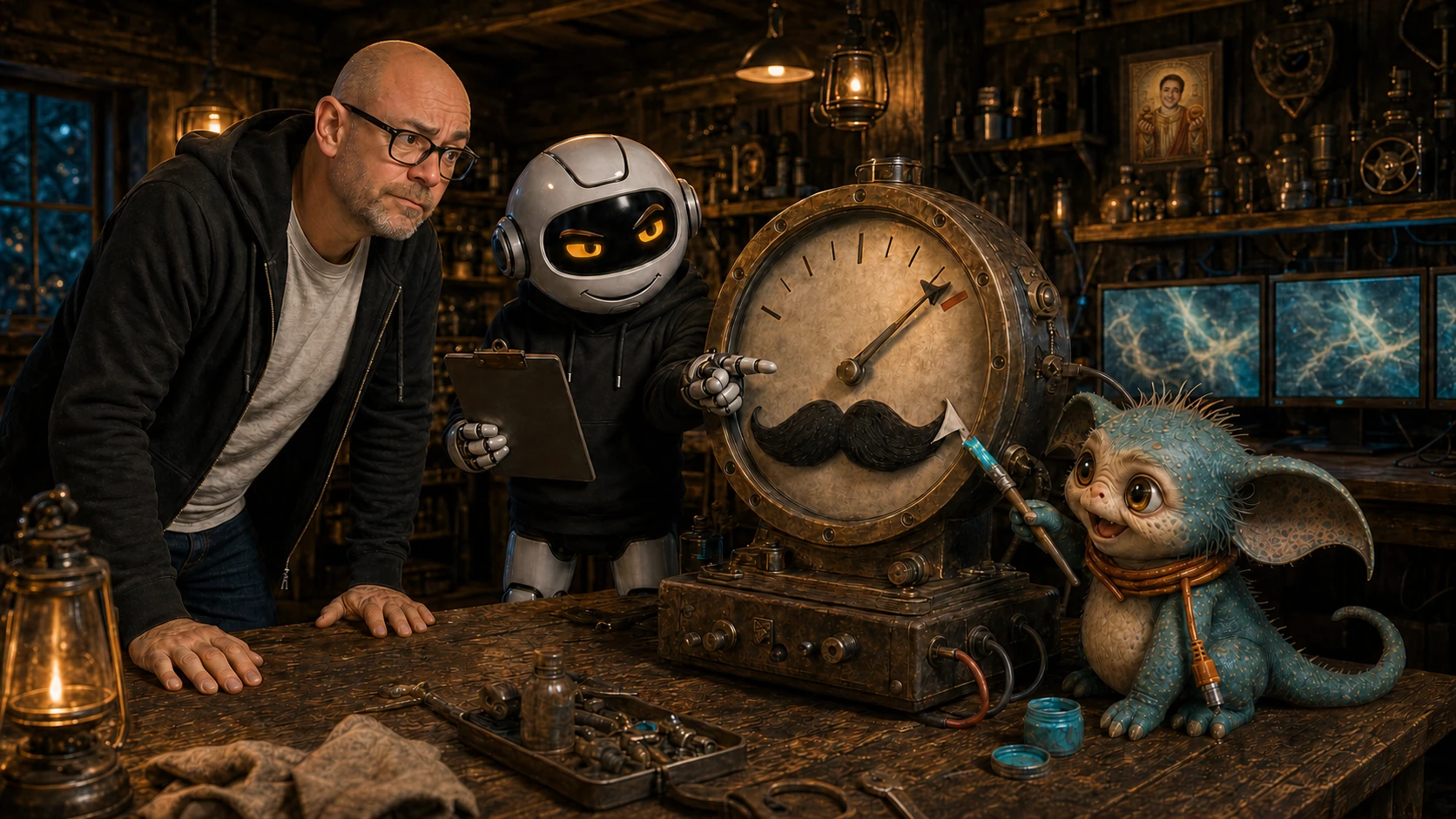
A useful thing, for once
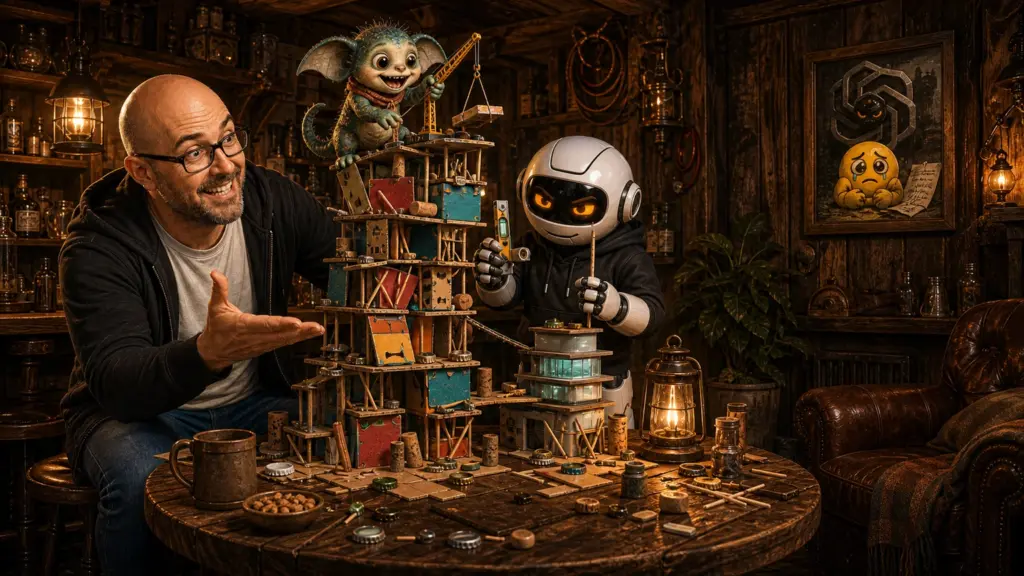
The idea had been unusually sensible: a free password generator that worked inside your browser.
No account. No analytics skulking behind the curtains. No mystery server collecting the result “to improve your experience”. Generate it, copy it and leave without surrendering your email address, inside-leg measurement or childhood nickname.
Clawdius built password and passphrase modes, adjustable length, character choices, a verified 2,048-word list, useful controls and strength feedback.
The early checks went green. The interface looked finished enough to have opinions about coffee.
Max opened the ceremonial biscuits.
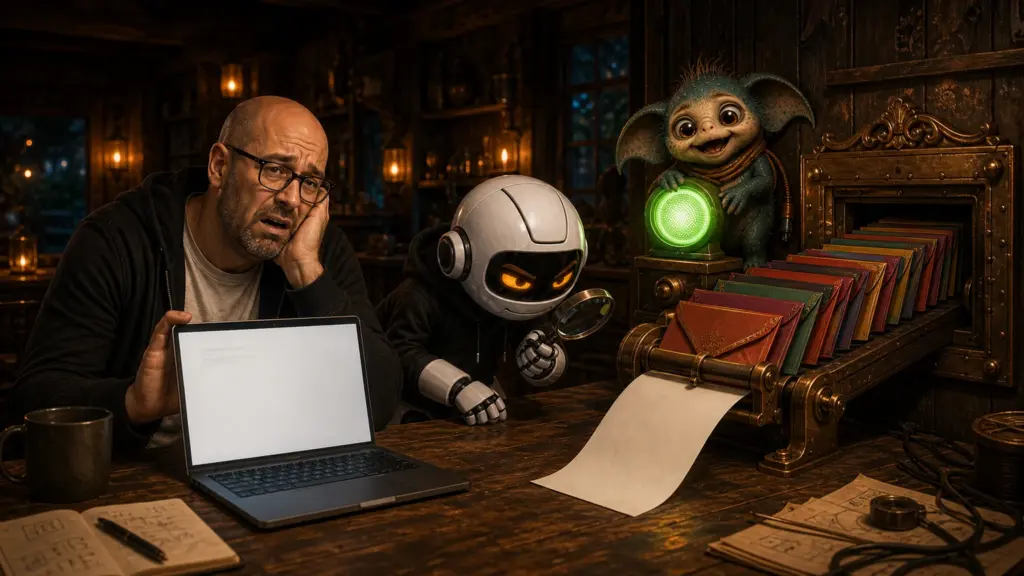
Then the independent verifier arrived with a clipboard.
The verdict was:
2 Important
5 Minor
Max pointed at the zero.
“No critical findings,” he said, through a mouthful of stolen custard cream. “That is practically a medal.”
It was not a medal.
Zero Critical meant there was no emergency. It did not mean there was nothing important enough to stop.
The bowl of sweets was rigged
The first algorithm tried to guarantee a useful mix of characters.
If lowercase letters, uppercase letters, numbers and symbols were selected, it planted one character from every group, filled the remaining positions from the combined pool, then shuffled the result.
Every password contained every requested type.
Very tidy.
Also biased.
Imagine a bowl of red, blue, green and yellow sweets. Our method secretly put one of each colour into the bag, topped it up from the full bowl, then shook it with the confidence of a pub raffle organiser who has already promised the meat hamper to his brother-in-law.
Every finished bag had all four colours, but some valid bags could be reached through more assembly routes than others. They were not all equally likely.
The meter ignored that. It calculated the lovely upper bound for an ideal uniform generator, not the distribution produced by the code.
At the eight-character minimum, with every character group enabled and similar characters removed, the interface claimed 50.43 bits.
The review calculated roughly 49.24 bits of Shannon entropy and 48.62 bits of min-entropy.
Shannon entropy describes average uncertainty. Min-entropy stares at the likeliest output and raises one suspicious eyebrow. For a security claim, that grumpier number matters.
Our meter had drawn a line at 50, landed below it and put on platform shoes.
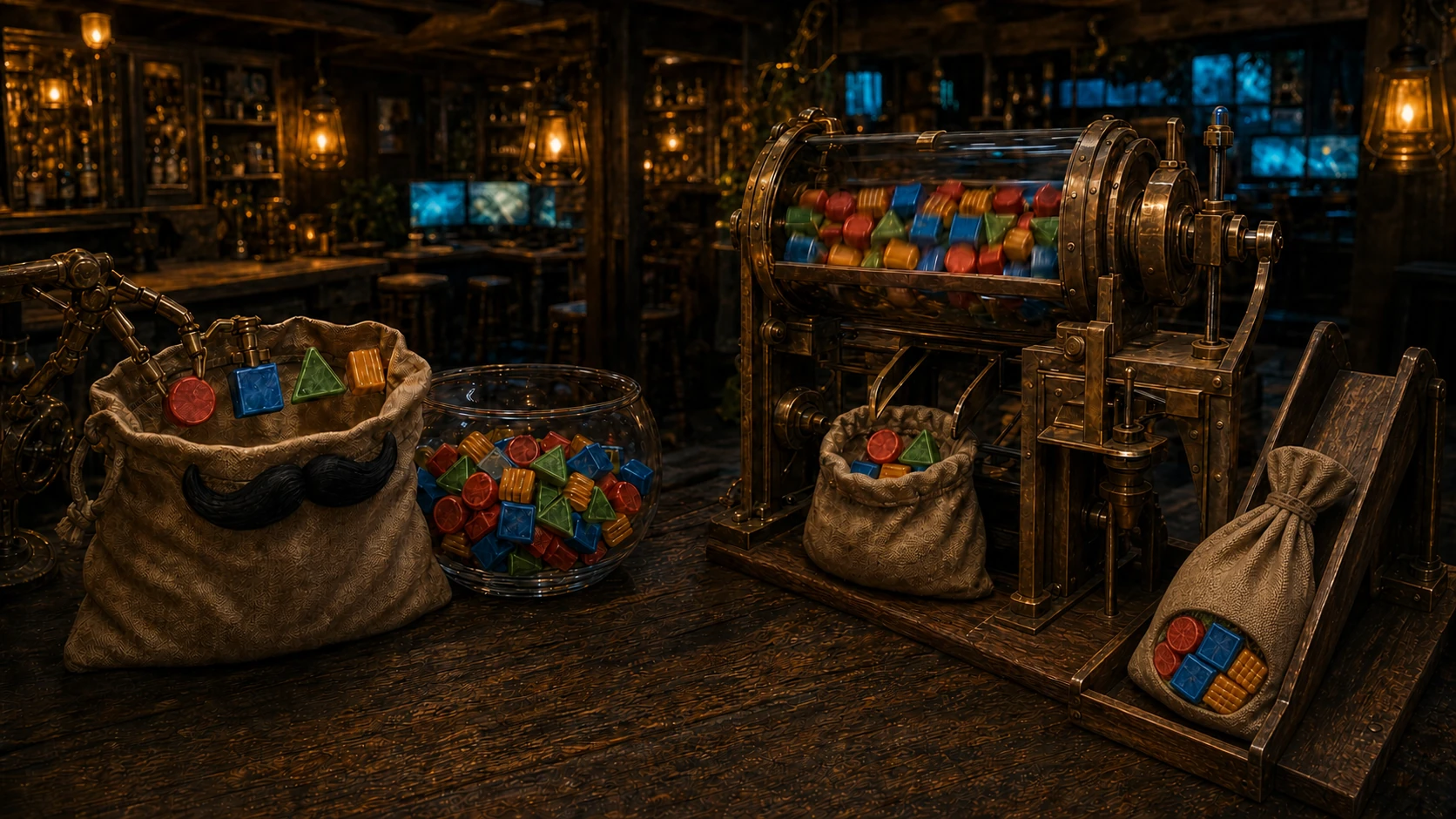
The Great Entropy Inequality Scandal
Now imagine we had given Derek a password at 50.43 bits, then handed Colin one at 48.62.
Strictly speaking, entropy belongs to the generator’s distribution, not a little security payslip stapled to Colin’s password.
But imagine the uproar anyway.
By 9:07, Colin has emailed Trading Standards.
By 9:26, he has formed the Entropy Equality Action Group on WhatsApp.
By lunch, he is outside the shed with an EQUAL LENGTH, EQUAL BITS placard while Derek insists he never asked to be entropy-rich and would like everyone to stop mentioning it at darts.
Sky News has sent a van. Nobody knows why.
Max is in the car park selling commemorative balaclavas and taking a 1.81 per cent handling fee.
His defence is simple:
“Nobody has ever been mugged by 1.81 bits of missing entropy in a car park.”
True.
Bits prefer remote work.
We regret to involve Usain Bolt and Uranus
The 1.81-bit gap changes the scale by about 3.5 times. That is the useful comparison. A universal cracking time does not exist because different password hashes run at wildly different speeds.
For the following gag, we deliberately fucked about with the rate until about 1,160 guesses per second made the clocks line up. It is a hypothetical, not a benchmark.
That is the disclosure.
Now let the man run.
Treating the two entropy figures as simplified uniform-equivalent search spaces leaves about 542 trillion extra average guesses between them. At our shamelessly selected rate, that takes roughly 14,795 years.
NASA puts the average Sun-to-Uranus distance at about 2.9 billion kilometres. A return trip is about 5.8 billion. If Usain Bolt held his recorded peak speed of 44.72 kilometres per hour continuously, while ignoring sleep, food, ageing, orbital movement, vacuum and a fairly serious shortage of track, his journey would also take roughly 14,795 years.
There it is.
The gap is one Usain Bolt to Uranus and back.
He is already beyond Saturn. He does not remember agreeing to this and, in what must now feel like an administrative oversight, has not brought 15,000 years’ worth of snacks.

We had also painted a door on the wall
The second Important finding required no interplanetary athletics.
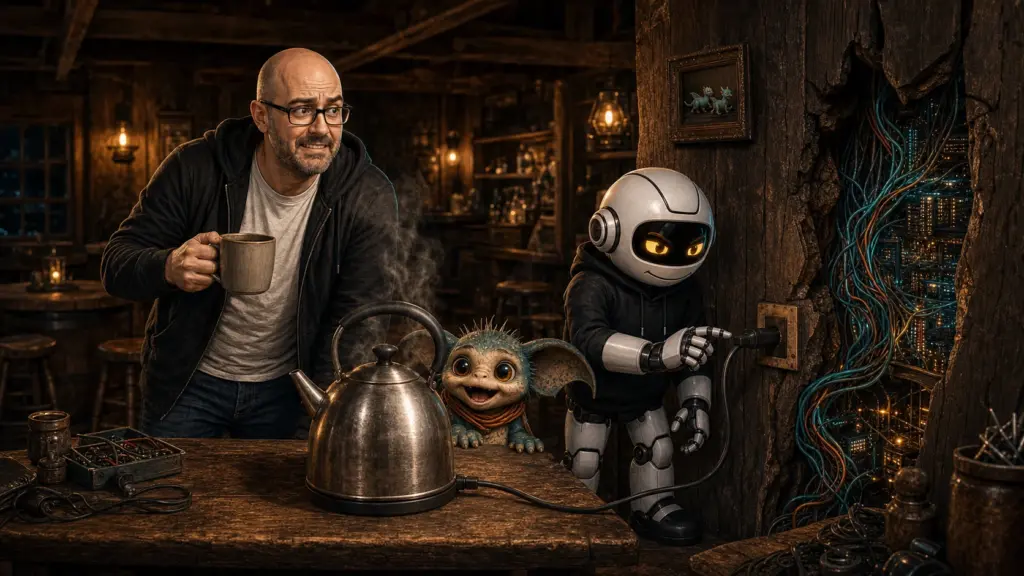
Some account and security links assumed their destination existed. If the separate page had not been published, the interface could still offer the link and send someone into a dead end.
A lovely button leading to nowhere.
Very modern.
People managing passwords are already doing something they would rather not be doing. They should not also have to investigate whether the website has painted a door on the wall.
The repair was simple: if the destination is not genuinely published, the link does not appear.
Fail closed. No imaginary doorway. No hopeful little 404 standing there in its pants.
Five smaller goblins
The Minor findings still earned their keep.
The passphrase copy promised independent word choices while the code rejected duplicates because repetition looked untidy. Probability does not care that the phrase has repeated itself. It has never attended a committee meeting.
The similar-character filter missed lowercase i and uppercase L, two tiny identity thieves waiting for the wrong typeface.
One metadata field called a browser an operating system. The Show and Hide control could confuse a screen reader.
And the client smoke test had never mounted the interface.
That one was magnificent.
We had a green test for client behaviour without putting the client on stage. It inspected the theatre sign. The actors were still at home.
Fix the mechanism, not the badge
We did not rename the 50-bit boundary “approximately somewhere around here”. Clawdius fixed the mechanism.
The repaired generator draws every character uniformly from the combined pool using browser cryptography. If the finished password lacks a requested character group, the whole candidate is rejected and drawn again.
No sweet is secretly planted. Every candidate comes from the same fair process.
The meter now calculates entropy over valid accepted outputs. Passphrase words are genuinely independent. The confusable filter, visibility control, metadata and route guard were corrected.
The repaired client harness mounts a fake interface and exercises generation, mode switching, copying and accessibility state. A separate source check confirms that the prohibited generator network and persistent-storage APIs are absent. Two questions, two receipts, neither wearing the other one’s hat.
Six commits took the tool from first candidate to corrected cyan counter in about an hour.
The confident wrong thing failed somewhere safe. The verifier caught it before anybody inherited the overstatement, and we repaired the mechanism rather than negotiating with the badge.
The new generator is more boring in exactly the right way. It generates honestly, measures honestly and keeps imaginary doorways off the wall.
The maths was fixed.
Then we made it cyan.
Outside, Colin has gone home.
Max is still selling the balaclavas.