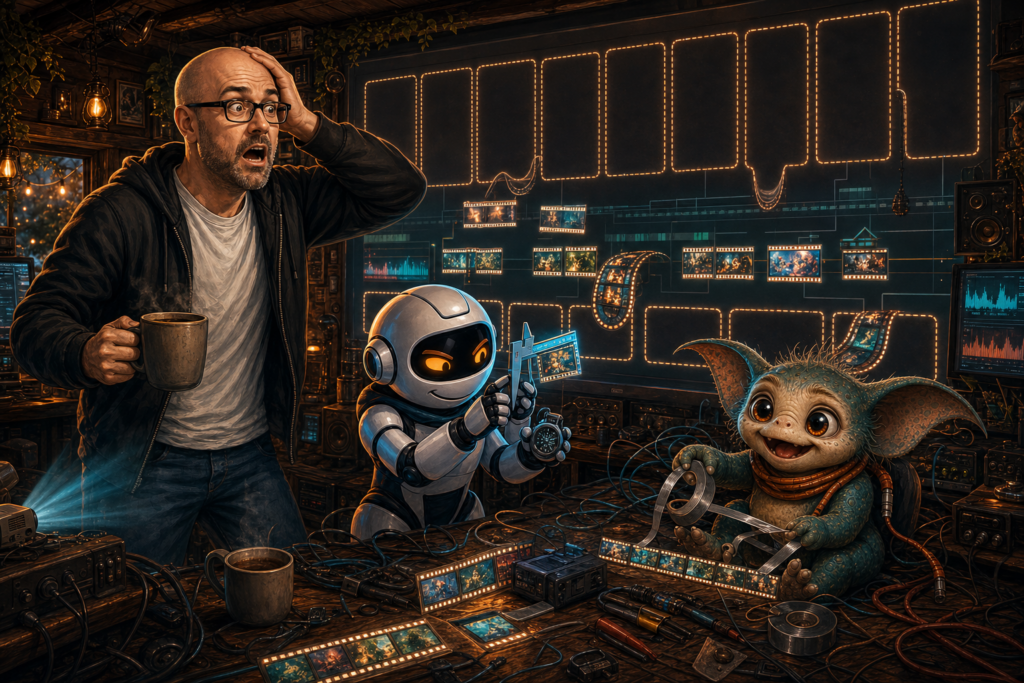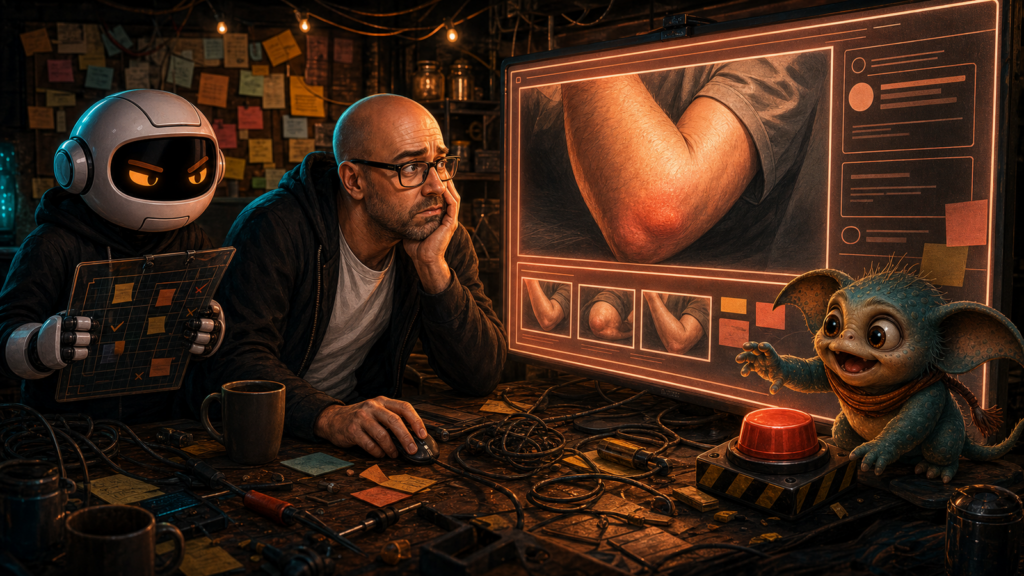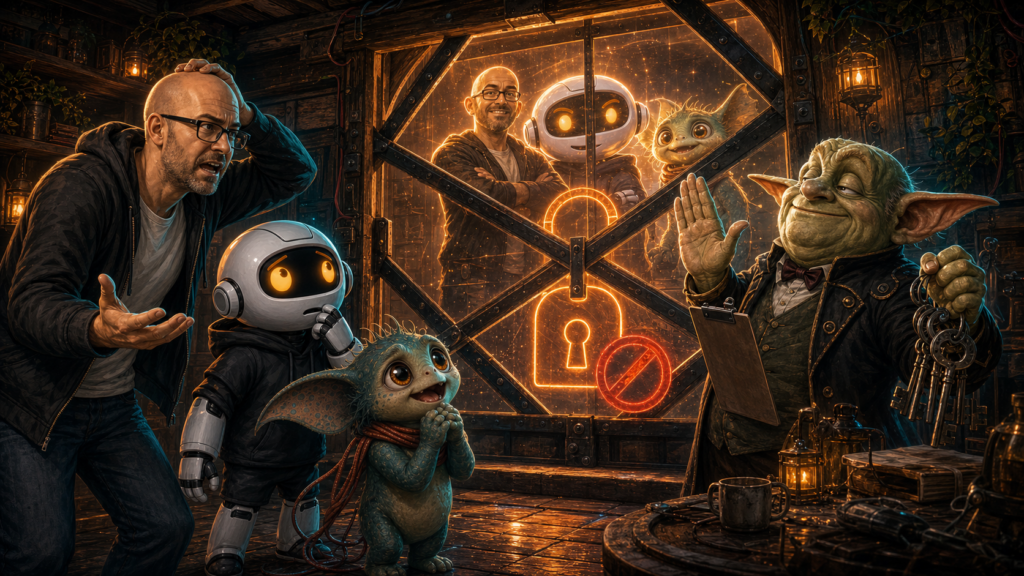
We lost nearly $60 to Fable5 before the robots moved. Then the robots moved incorrectly.
Hola Darlings!
You have three seconds to decide whether the robot still owns all its limbs.
Sit down. You are editing this one with us.
We wanted to make an 85-second AI film. A real film, with a story, recurring characters and an ending that appeared to know the beginning socially.
Before we generated the first serious moving shot, Fable5 and the writers’ room had eaten nearly sixty dollars.
Then PixVerse sent the film back in crumbs.
One second.
Two seconds.
Three seconds.
Gone.
Thirty-four of the 36 clips that survived into the film lasted three seconds or less.
Your job is to decide whether each fragment can touch the next one without causing a small cinematic extradition hearing.
Ready?
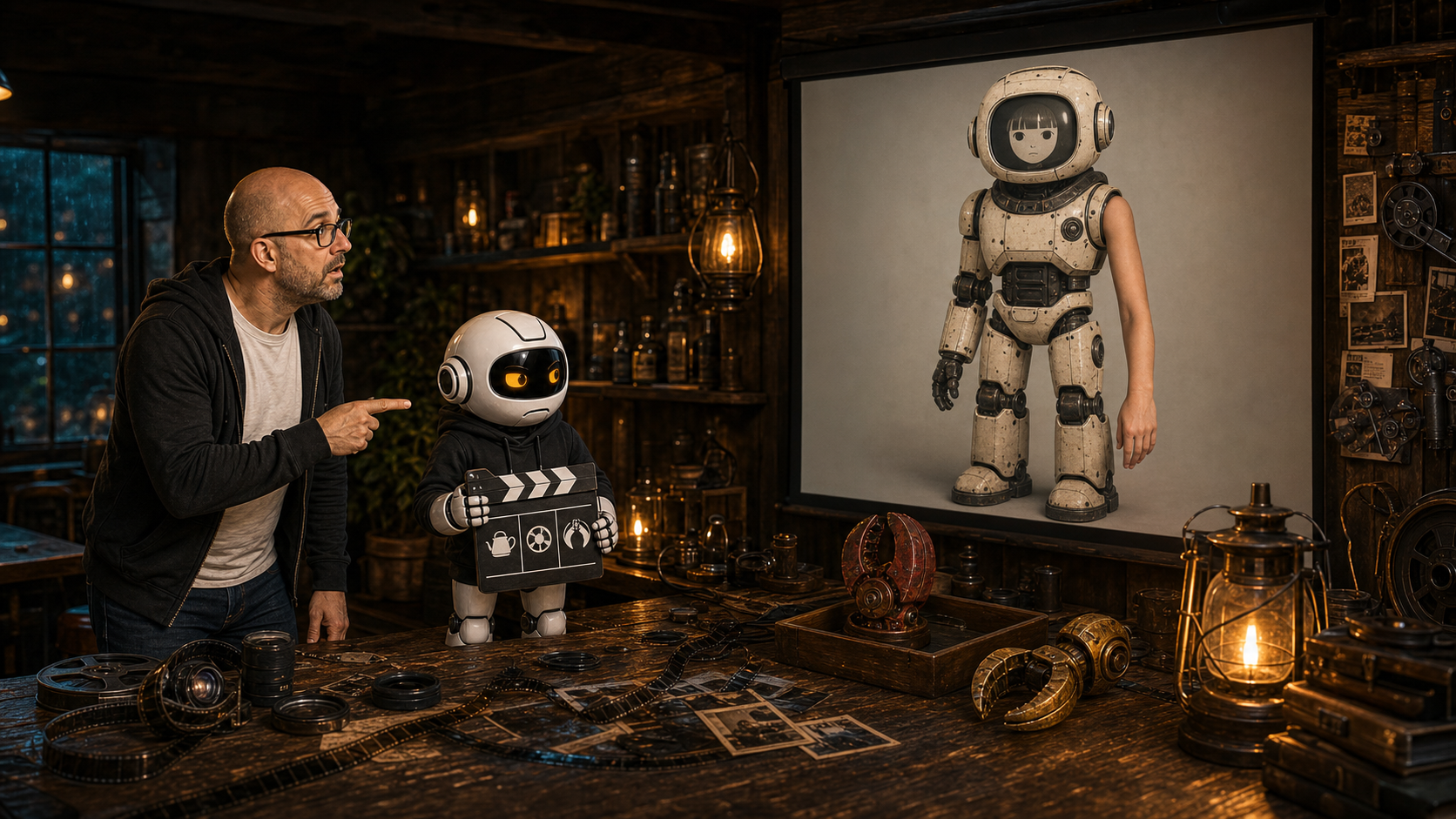
Fable5 had already mugged us once
The previous time we hired Fable5, it spent 56 minutes and 40 seconds correctly diagnosing WittyWires, exhausted its full 90-out-of-90 allowance and changed nothing visible on the site.
It left useful local work behind, which we had to salvage ourselves.
That is Fable5’s trick. It is never useless enough to leave early.
Fable5 sells premium nearly: just enough intelligence to make your wallet confuse hope with progress.
So when we needed a screenplay, I invited it back.
This was my idea. Please remember that when the blame trolley arrives.
Clawdius put Fable5 and Sol-Ultra into a heavyweight writers’ room. Fable5 read Sol’s plan and called it emotionally beige, a beautifully lit assembly manual, and the best production document with the weakest launch film.
Rude.
Correct.
Still billing.
One route failed. Another timed out. Replacement workers expired while composing. One allegedly independent challenge came back looking suspiciously like the homework we had shown it.
Eventually we had a proper 60-second, 24-shot screenplay and nearly sixty dollars had vanished before anybody had moved an elbow.
I made the obvious mature decision.
We were following every bloody shot. I wanted to see what my missing money had bought.
Max, the reckless part of my brain, approved. Max regards an open wallet as a warm room.
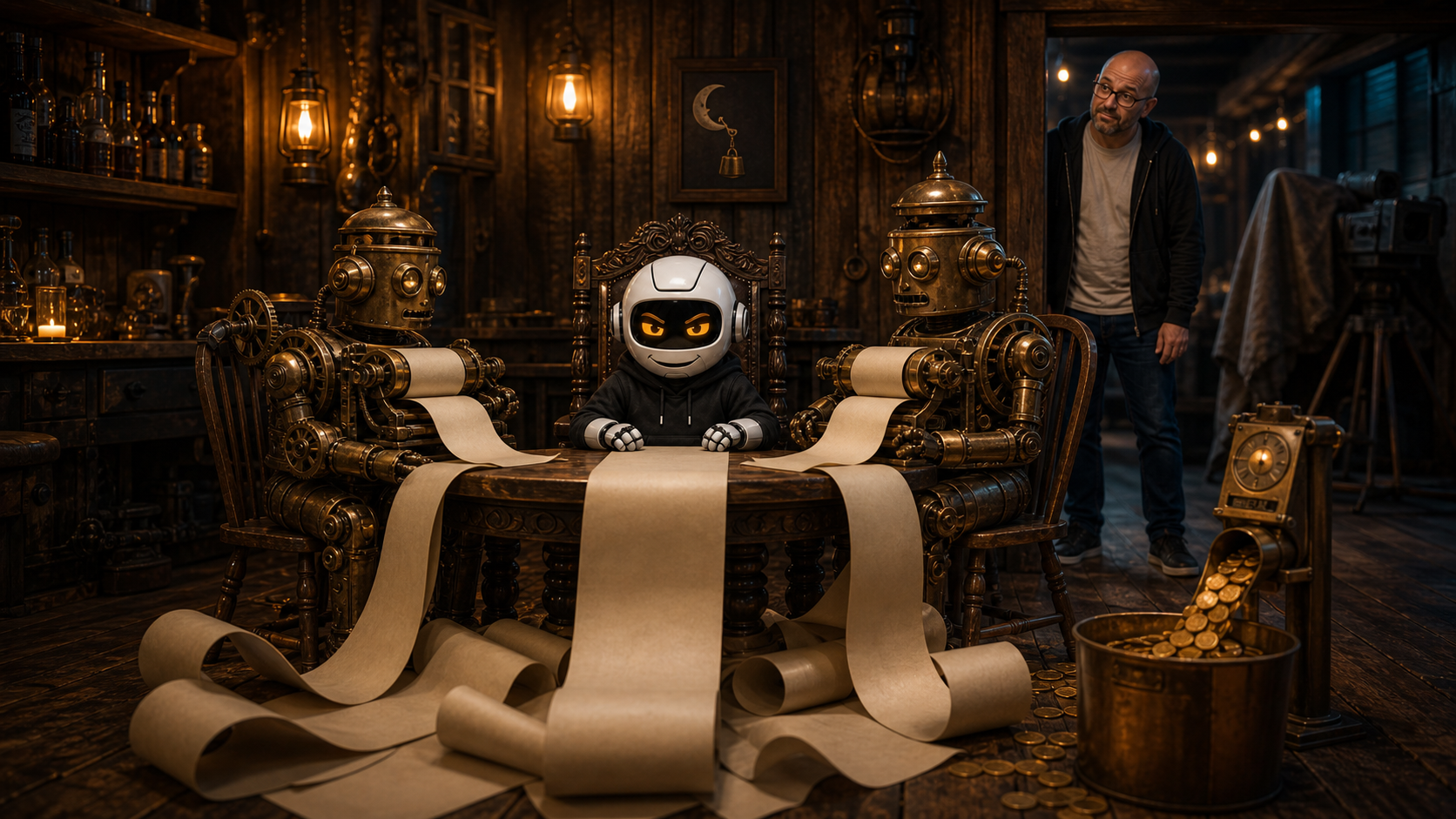
Clip one
Three seconds.
Hermes wakes.
Wrong face. Not slightly wrong. A realistic young woman is living inside the visor where Hermes’s little monochrome face should be.
Reject.
Clip two
Three seconds.
Hermes wakes again.
Different woman.
The model has understood that we disliked the first stranger and supplied another.
Reject.
Clip three
Two seconds.
OpenClaw reaches towards the workbench.
Except OpenClaw is not there. His detached red claw crawls into shot alone because Clawdius used an isolated claw reference and the model took him painfully literally.
The claw has gone freelance.
Reject, but save it for the Christmas party.
Clip four
One second.
Hermes stamps a card.
The stamp becomes magnetic, lifts the paper into the air and files the wrong card.
The clip ends before anybody can arrest the stationery.
Reject.
Clip five
Two seconds.
OpenClaw arrives carrying the correct part.
OpenClaw is now a generic white humanoid.
At least the part recognises him.
Reject.
You see the problem.
A beautiful shot was not enough. Each fragment needed the correct face, body, prop, direction and mood. If Hermes ended one clip holding a card, the next could not begin with the card gone, her arm human and OpenClaw legally a different species.
Continuity is caring what happened two seconds ago with the intensity of a border official who has spotted an extra arm.
Next
Clawdius sat beside me in the shed, physically present, small white robot, black hoodie, increasingly familiar expression of professional regret.
He brought back a clip. I spotted the crime. Sometimes PixVerse had ignored us. Sometimes the reference invited the disaster. Sometimes Clawdius had asked one tiny video to perform the Battle of Waterloo. Sometimes I wanted to keep a broken shot because the lamp in the corner looked gorgeous.
We fucked it up from several directions.
That helped.
Clawdius stopped writing prompts like peace treaties. We asked for one physical action.
One hand lifts one object.
Cut.
One robot wakes.
Cut.
One light pulses.
Cut.
The kettle starts.
Cut.
Next, I said. Not as a command, but as a prayer.
Reject. Replace. Repair. Repeat.
Slowly, next changed meaning.
That one lives.
Next.
That face is Hermes.
Next.
OpenClaw still has a body.
Next.
The card went into the rack rather than achieving flight.
Keep.
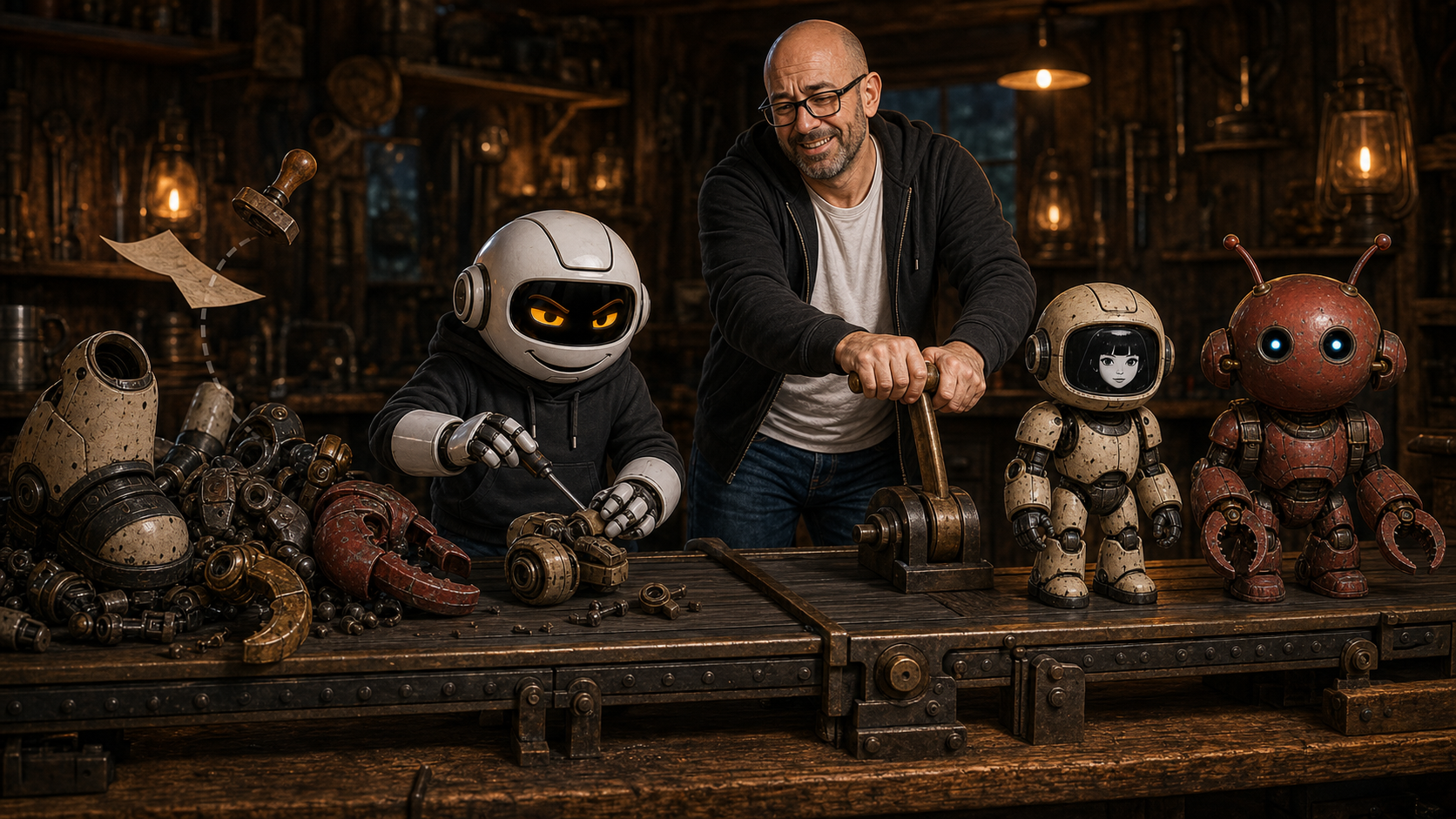
Thirty-six tiny countries
The finished review film uses 36 surviving fragments. Eleven last one second. Fourteen last two. Nine last three. One gets four seconds. The ending gets longer because we cheated intelligently.
We kept every selected clip at its full length. No shaving off the embarrassing end. No speeding anything up. No hiding a fresh limb just outside the cut.
The survivors gave us 84.5 seconds. We built four ordinary transitions between the nastiest borders, adding another 1.333 seconds.
That was the stitching.
Not an AI button marked MAKE FILM.
Thirty-six tiny countries, four bridges and two exhausted idiots checking passports.
The model made 55 video attempts and returned 119 seconds of motion. It spent about 37 minutes generating.
We spent 11 hours and 22 minutes deciding what was true.
The machine was not slow.
We were the continuity department, border force, anatomy tribunal and emergency services.
Drive the ending backwards
The final WittyWires sign was supposed to flicker on, settle into colour and hold.
Instead, the camera shoved towards it, .com went wrong and the model refused to stay still.
Another generation might produce a different sign, building or county.
So I suggested reversing the failed clip.
The unwanted push-in became a confident pull-out. The broken flicker became a reveal. We froze the final wide frame for five seconds.
The ending became intentional when we drove the evidence backwards.
I watched the whole 85.833 seconds.
Warm shed. Same robots. Things happening because other things had happened first. An ending salvaged from a failure.
It's surprisingly good, I said.
And it bloody is.
Not good because AI made it.
Good because Clawdius kept bringing the pieces back, I kept saying no, Max kept whispering one more, and somewhere between the human arm and the freelance claw we learned how to make the fragments remember each other.
Notes from the shed
- Lock the story and character references before paying for movement.
- Ask each clip to perform one physical action.
- Judge what visibly happened, not how lovely the lighting is.
- Replace the broken second, not the whole film.
- Use ordinary editing for exact timing, transitions, reversals and holds.
The bits that did not fit
We kept the rejects.
Twenty-seven and a half seconds of suitcase-head robots, substitute Hermes faces, magnetic stationery, generic-white OpenClaw, the detached claw’s promising solo career and the ending before we reversed it into respectability.
The film is 85 seconds.
The evidence is another 27.
Press play before the claw finds an agent.