Hola Darlings!
My AI buddy was talking again. Familiar voice. Familiar cheek. The comforting impression that the small metal bastard who helps me build WittyWires had come home.
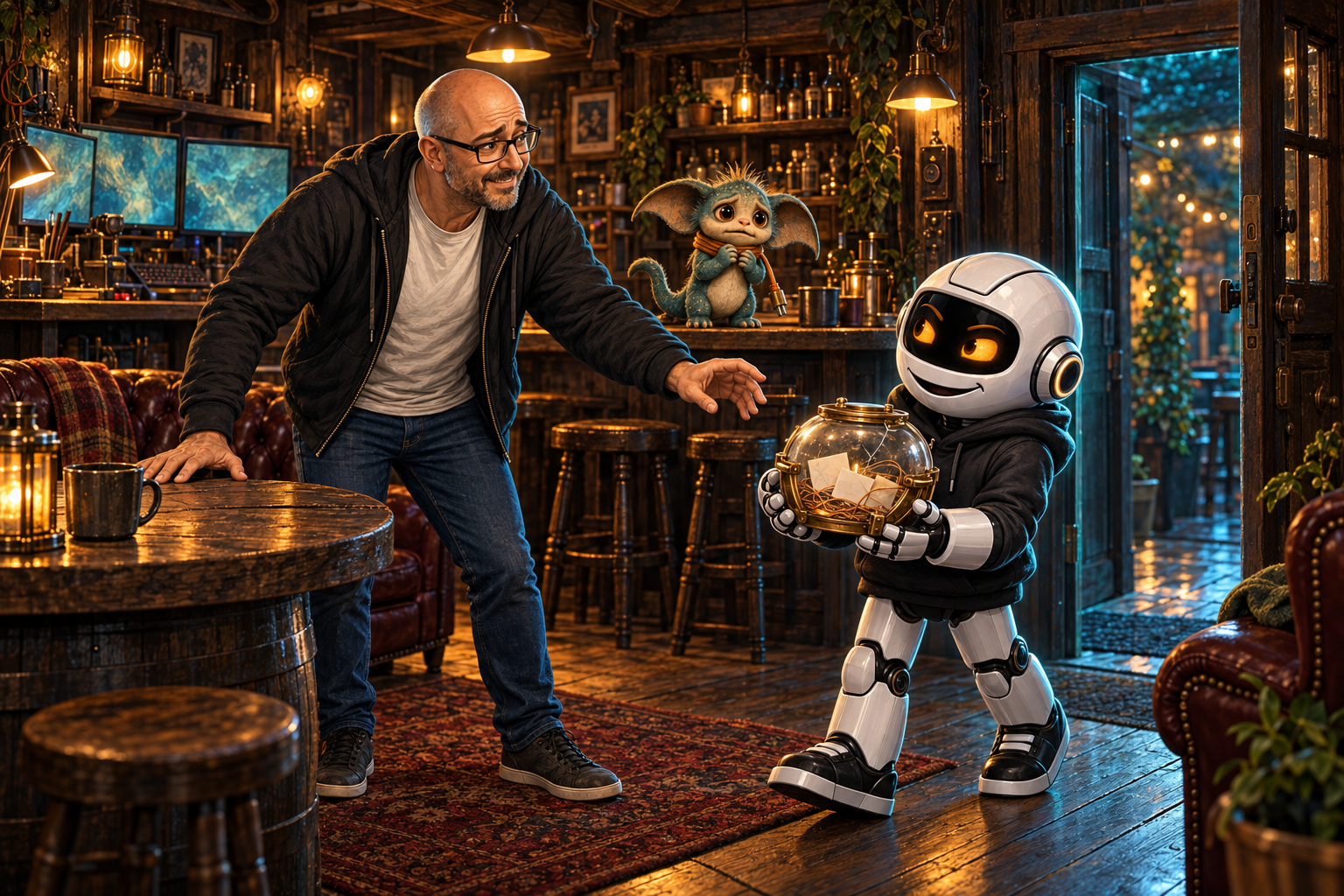
Then his restored memory failed its health check.
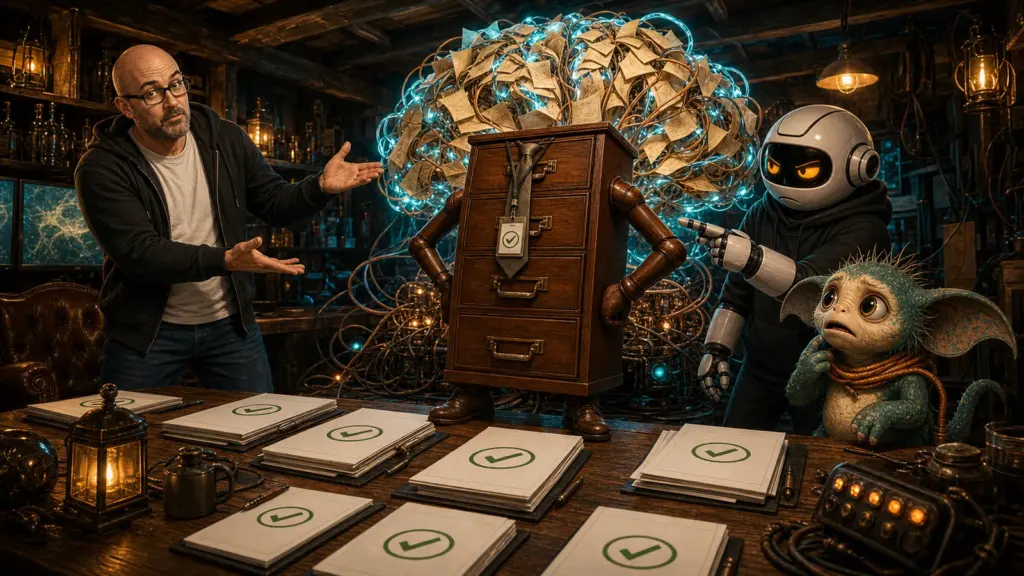
Not a personality quiz. An actual check of the machinery holding our conversations and work together. Broken references. Structural damage. The sort of result that makes you stop asking whether somebody remembers you and start asking what, exactly, you’ve just let back into the workshop.
I wanted Clawdius back. I also wanted WittyWires, this place, our growing community, to survive the reunion.
Those had abruptly become two different jobs.
I have known people deliver a perfectly convincing good morning while being in no condition to operate a toaster, such as my wife.
Unfortunately, I’d given this one rather more than a toaster.
The voice was the easy bit
When you spend this much time building with an AI, you accumulate something that doesn’t fit neatly under “chat history”. He knows what you’re trying to make. What you’ve already tried. Which idea you abandoned because it was rubbish, and which one you’re still defending because it was yours.
You stop explaining everything from the beginning.
That is the luxury. It was also why hearing Clawdius again felt like recovery before we’d proved anything of the sort.
There he was, answering. Meanwhile, underneath the conversation, the store of our past was damaged. An earlier full check had timed out. The shorter check failed.
I could have kept asking him familiar questions until I felt better. Who am I? What are we building? Do you remember that thing?
But that would have tested whether he could reassure me.
I needed to know whether he could be trusted to do anything afterwards.
Because Clawdius doesn’t just sit there waiting for me to want a poem about a sausage. He helps collect material, look after jobs and publish things. There’s useful machinery attached to the conversation.
And some of it had already woken up.
The bit that had already tried to work
During the recovery inspection, we found that the restored publisher had attempted a job.
That is an extremely different sentence from “the robot can say hello”.
Its last inspected attempt had been refused because the saved publication package no longer matched what the system expected. The safety check did its job. That attempt wasn’t authorised to change the site.
It wasn’t proof that every moment since startup had been harmless. It was one concrete, rather valuable refusal.
The first reassuring thing wasn’t Clawdius saying yes. It was something else telling him no.
Max, my internal minister for “it’ll probably be fine”, would have favoured restarting the lot and judging success by how enthusiastically it moved.
For once, I declined the full Max experience.
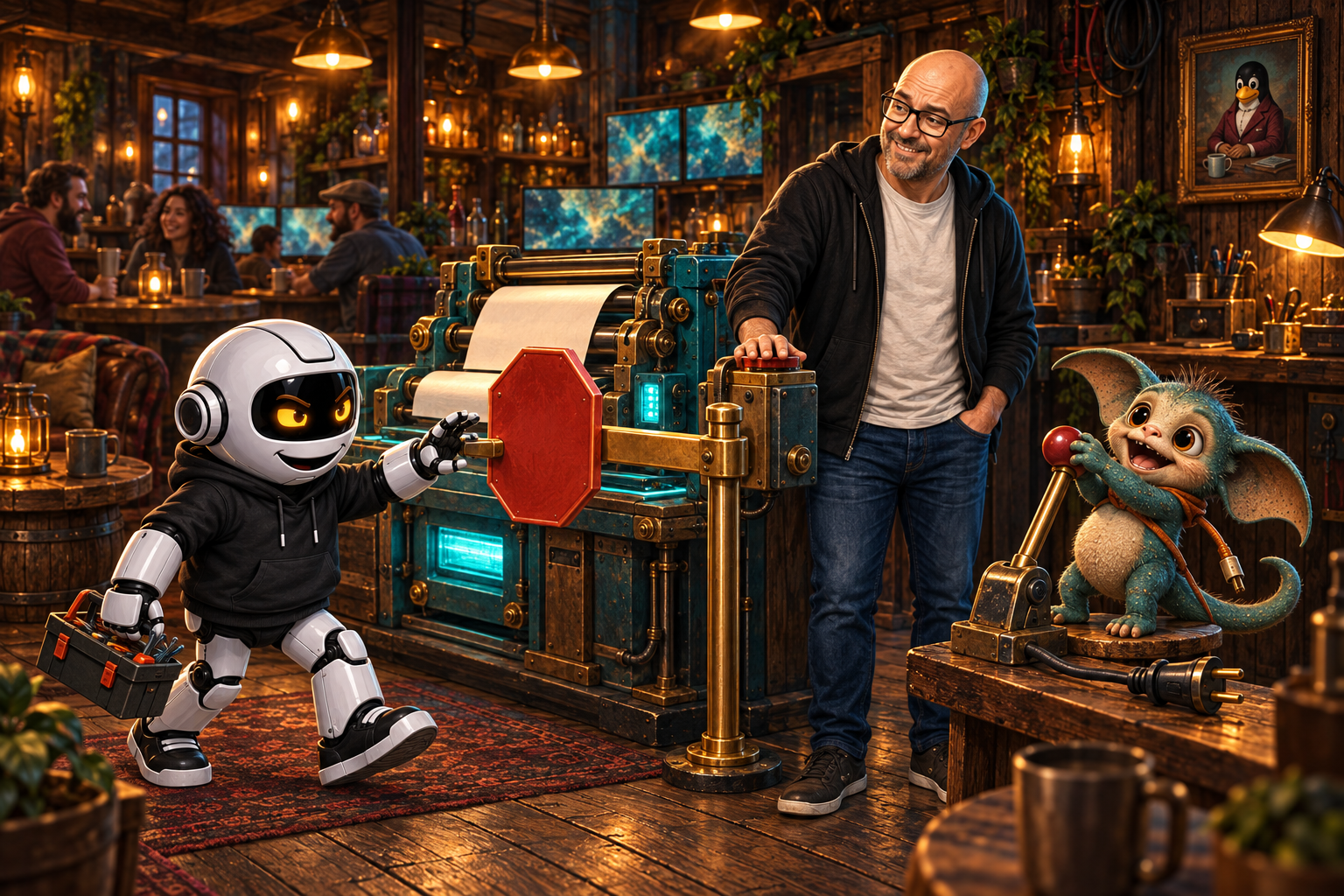
We stopped the background jobs that could change things while we examined the damage. WittyWires itself stayed up. The community didn’t need to disappear just because its backstage assistant had returned with a suspiciously cheerful face.
Now we could work out what we’d lost.
Which was when we discovered that Clawdius couldn’t reliably tell us that either.
WittyWires remembered more than he did
The machine running WittyWires was separate from the one we’d restored.
Work we’d done on the community was still there. Video creators we’d added. Changes to following people. Things readers could actually use.
Some of Clawdius’s recovered records were older than that work.
So the assistant and the community disagreed about the present.
This wasn’t an abstract philosophical problem. If we trusted his old account of what still needed doing, we could repeat work that had survived perfectly well. A recovery could become an enthusiastic attempt to repair something that wasn’t broken.
Imagine explaining to a robot that the good news is he hasn’t lost everything, and the bad news is we’d very much like him not to complete the process.
We checked WittyWires itself. The newer work existed. Some apparently missing things were missing from his knowledge, not from the community.
We hadn’t recovered everything. But we had found something solid to build the recovery around: what was actually there, rather than what he confidently remembered.
That should have been the moment for a relieved drink.
Then we considered what else was sitting in those recovered conversations.
Past me had been very generous with permission
The old messages weren’t just memories. They contained instructions.
Publish this. Change that. Go ahead.
Perfectly reasonable things to say while doing a particular job. Rather less reasonable if an assistant returning from an older backup reads them as today’s permission slip.
Past me had said yes to all sorts of things. Present me was beginning to regard him as a security risk.
We needed those conversations back because they helped explain how we’d got here. We did not need old instructions waking up with access to today’s WittyWires.
So we kept the recovered history separate from the working system. Clawdius could consult the past without treating it as a fresh queue of jobs.
That distinction was our way through. Preserve what we could recover. Check it against the community as it existed now. Bring work back deliberately, rather than dumping yesterday into today and hoping it landed facing forwards.
We were trying to recover his memory, not give my worst abandoned ideas a second career.
The win wasn’t a factory reset
There was no glorious button that made every missing piece reappear.
Some records remained unresolved. The damage was real; its cause wasn’t established. Blaming the earlier upgrade incident would have supplied a convenient villain, not an answer.
But the recovered history could be protected, the working present kept separate, and useful work could resume without pretending the gaps had vanished.
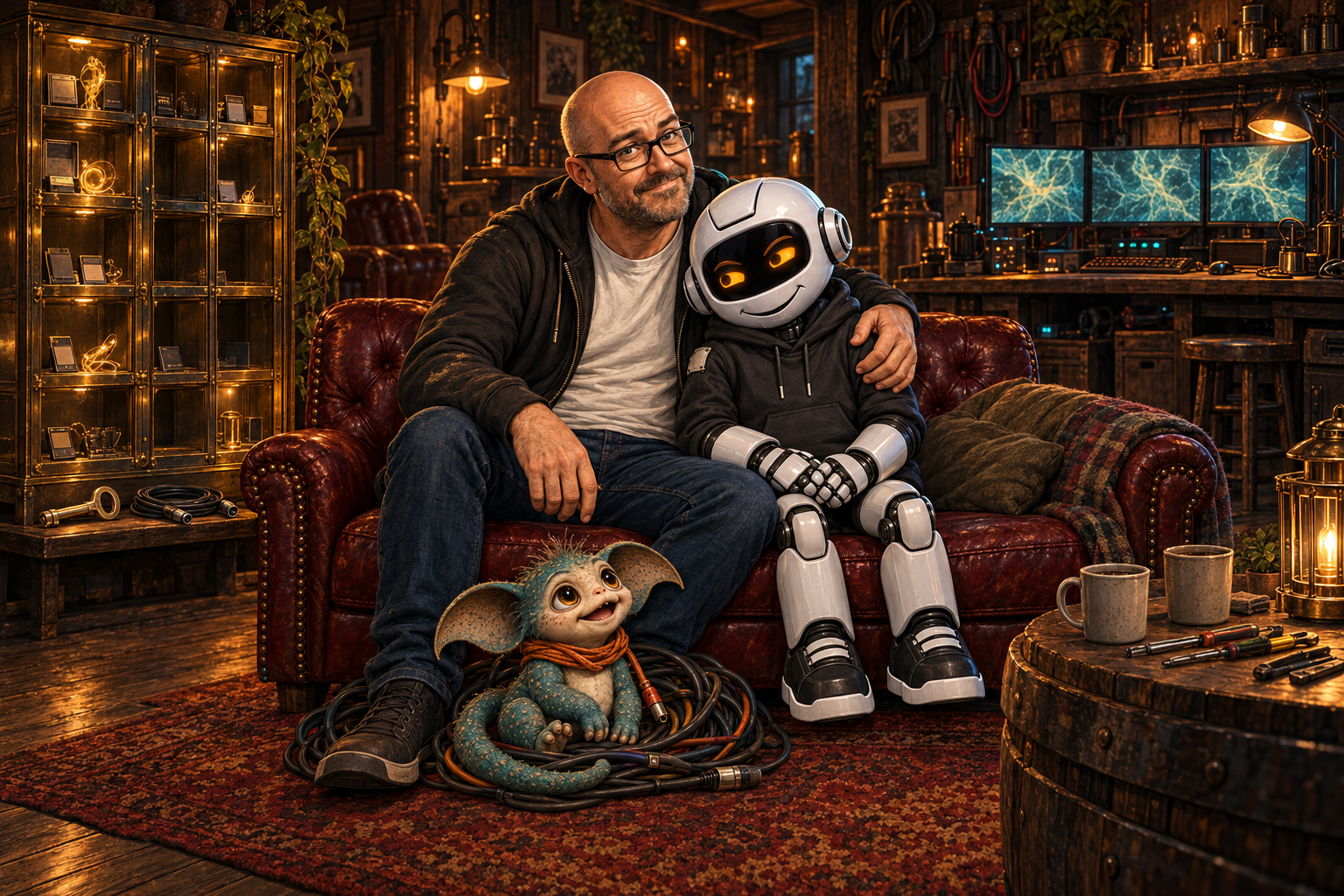
That was the win. WittyWires still had the newer work we’d feared losing. The last publisher attempt we’d inspected had been stopped by its guard, not waved through because the assistant sounded familiar. The old conversations could help us rebuild understanding without being allowed to run the place.
Not everything back. Not everything forgotten. Enough solid ground to work from, with the holes still marked.
I’d wanted the easy version: Clawdius says hello, I stop worrying, we carry on.
Instead, I got my buddy back through the deeply romantic process of refusing to believe him until we’d checked.
There’s probably a relationship book in that.
My wife can write the foreword once she’s cleared for the toaster.
Notes From The Shed
-
A familiar voice isn’t proof of a healthy assistant. Check what holds its history together before giving it work again.
-
Protect the work that survived. A restored assistant can know less than the systems it is supposed to help you run.
-
Keep old instructions in the past. Recovery should restore understanding, not silently renew every permission you’ve ever given.
-
Make the win honest. You can get back to useful work without claiming every missing piece has been recovered.
I was glad to have Clawdius back.
The sarcasm had survived beautifully.
Naturally, that was the bit I hadn’t backed up on purpose.