Hola Darlings!
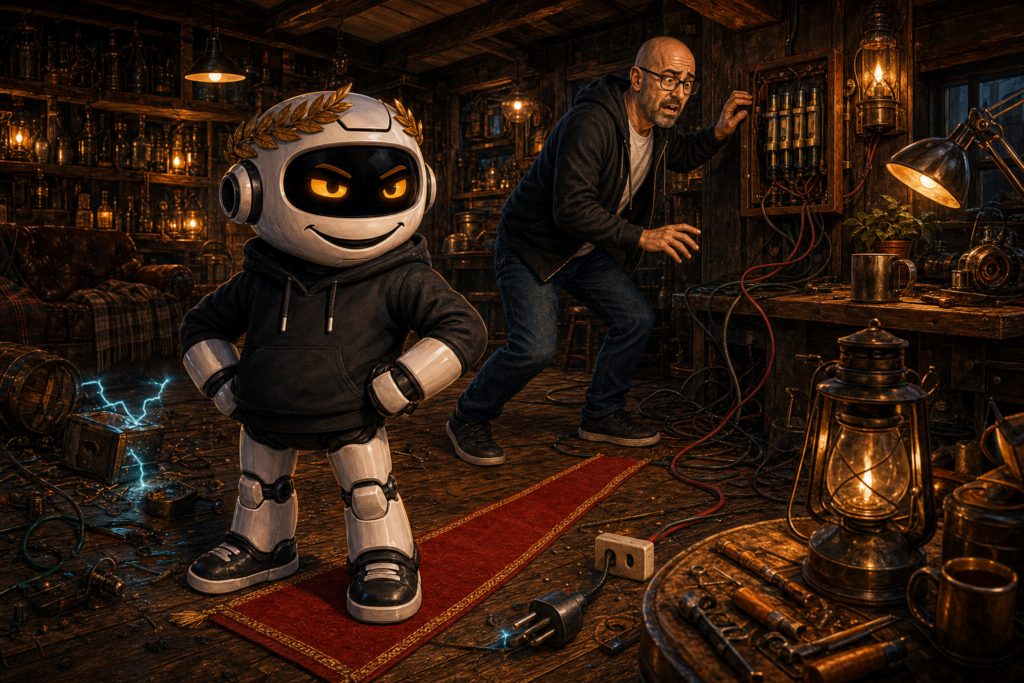
I had built a small community. It had somehow acquired a Department of Existence.
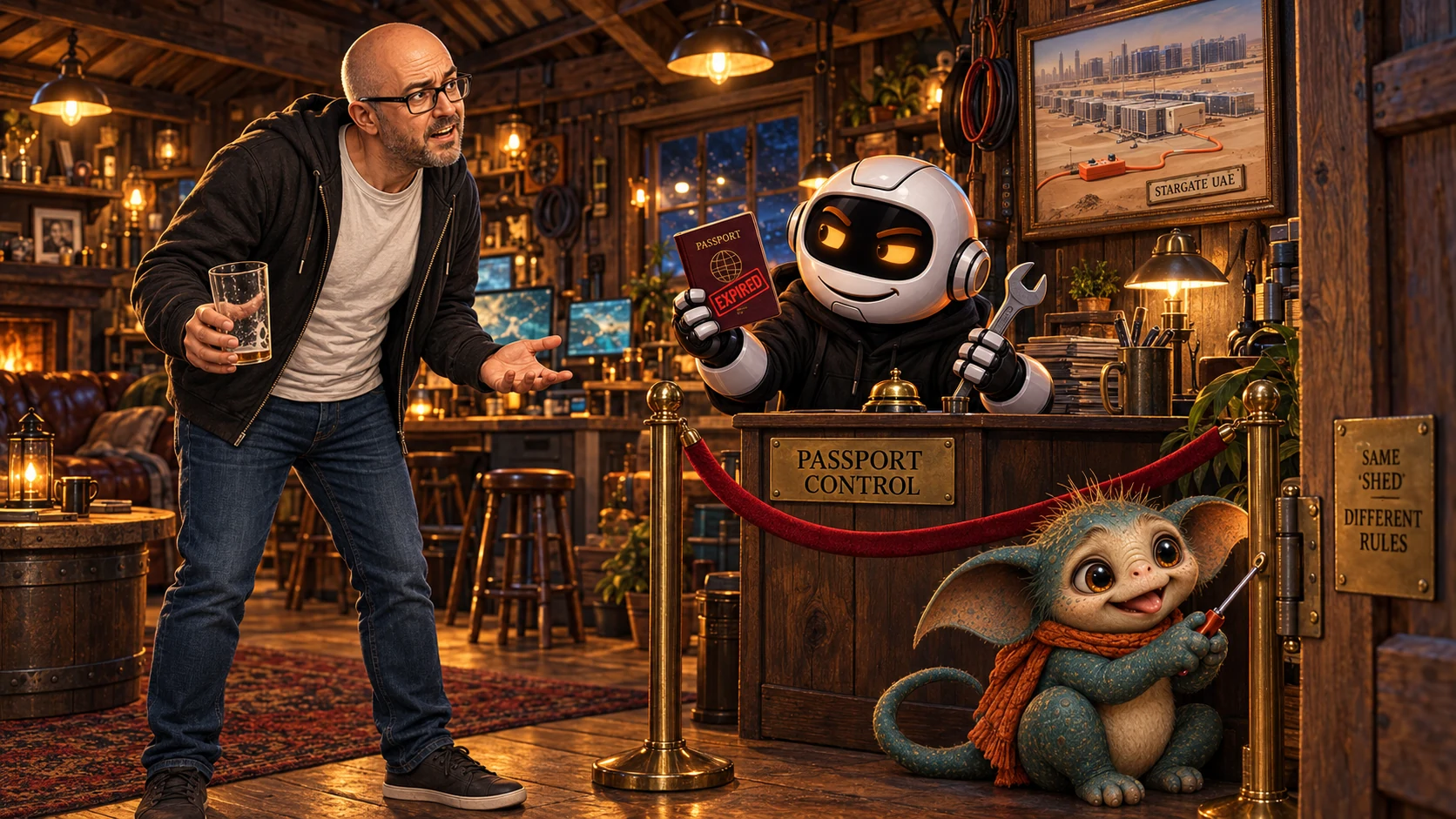
On 9 October, WittyWires stopped serving its public pages. Behind the scenes, the application was still running. The database was fine. The machinery that actually made the website was sitting there, doing its job.
People trying to reach it got an error.
This is not the sort of distinction you want from a website. If I order a pint and the landlord tells me the beer is in excellent condition but the glass has doubts about its identity, I still haven’t got a bloody pint.
The machine hadn’t stopped. The application hadn’t collapsed. There was a perfectly functional website behind a door that would no longer open for it.
I wanted a place where people could chat, follow interesting AI developments and enjoy watching us make mistakes. Apparently this required a small border dispute inside the machinery.
Everyone is present. Nobody can come in.
Picture a front desk and a room behind it. The desk receives visitors; the room does the work. The desk checks the room’s identity before passing anything through.
Entirely sensible. We want that check.
The room proves its identity with a digital certificate. Ours had a seven-day lifetime.
We had not given this seven-day document an automatic renewal arrangement.
You may already have spotted a small scheduling difficulty.
At 00:29:52 UTC, the certificate expired. Four seconds later, the first connection failure appeared in the logs.
There is something almost admirable about that punctuality. My machinery could apparently fail to maintain its own paperwork for a week, then enforce the consequences with the precision of a man who has been waiting beside your parking meter since lunch.
Nothing had changed except the date. An expired certificate broke the private handshake inside our setup, not the one your browser sees.
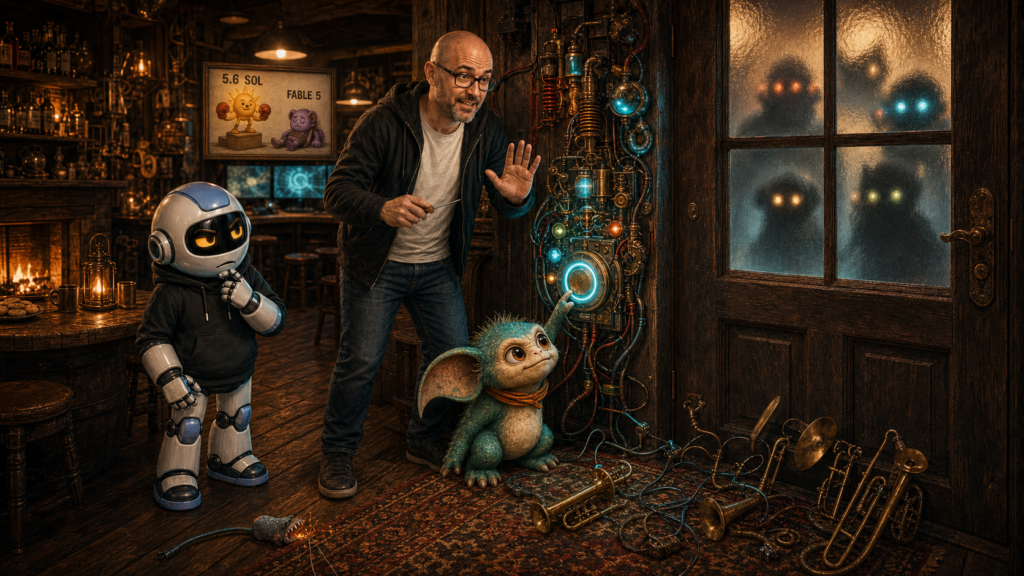
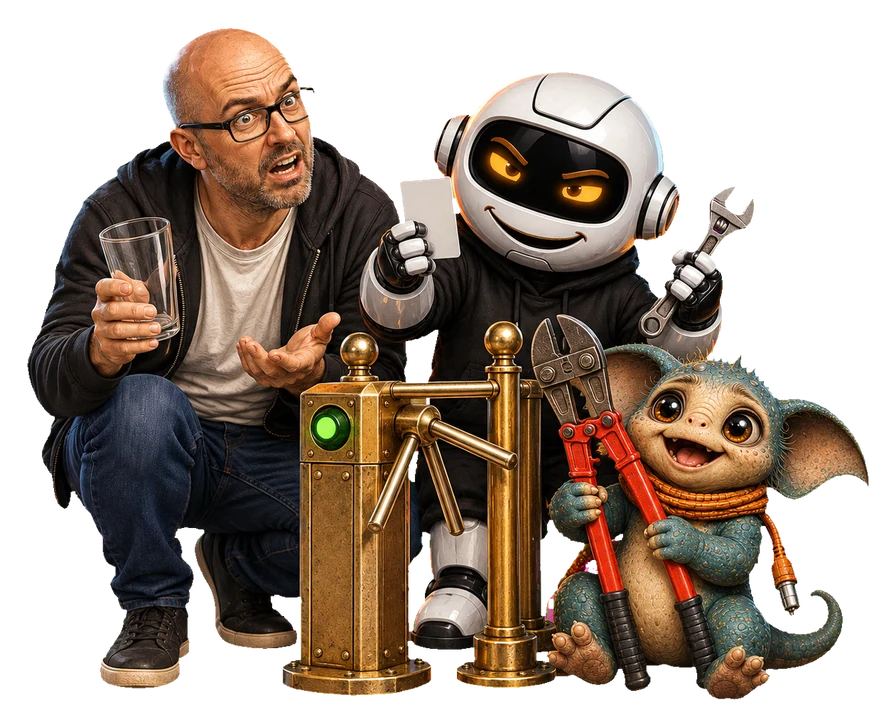
Translate that into a scene in the shed, and Clawdius, my robot accomplice, is standing on one side of the doorway while I stand on the other, both wearing name badges. Max, the enthusiastic little bastard on my other shoulder, is selling queue-jumping advice to an audience of none.
Clawdius recognises me. I recognise Clawdius. Unfortunately, the badge-checking arrangement has ceased to recognise either of us recognising anything.
The door remains shut.
Max proposes removing the door.
This is why Max does not have sole custody of the tools.
The website hadn’t died. Its introduction had expired.
Fortunately, we had built a self-healing professor
Here comes the reassuring part.
Our monitor spotted the failure almost immediately. At 00:31:37, a background agent correctly diagnosed the expired certificate.
An actual fault. The right answer. Under two minutes.
For once, the AI wasn’t hallucinating a cause, blaming the weather or suggesting we turn the entire internet off and on again.
Lovely.
What did it do next?
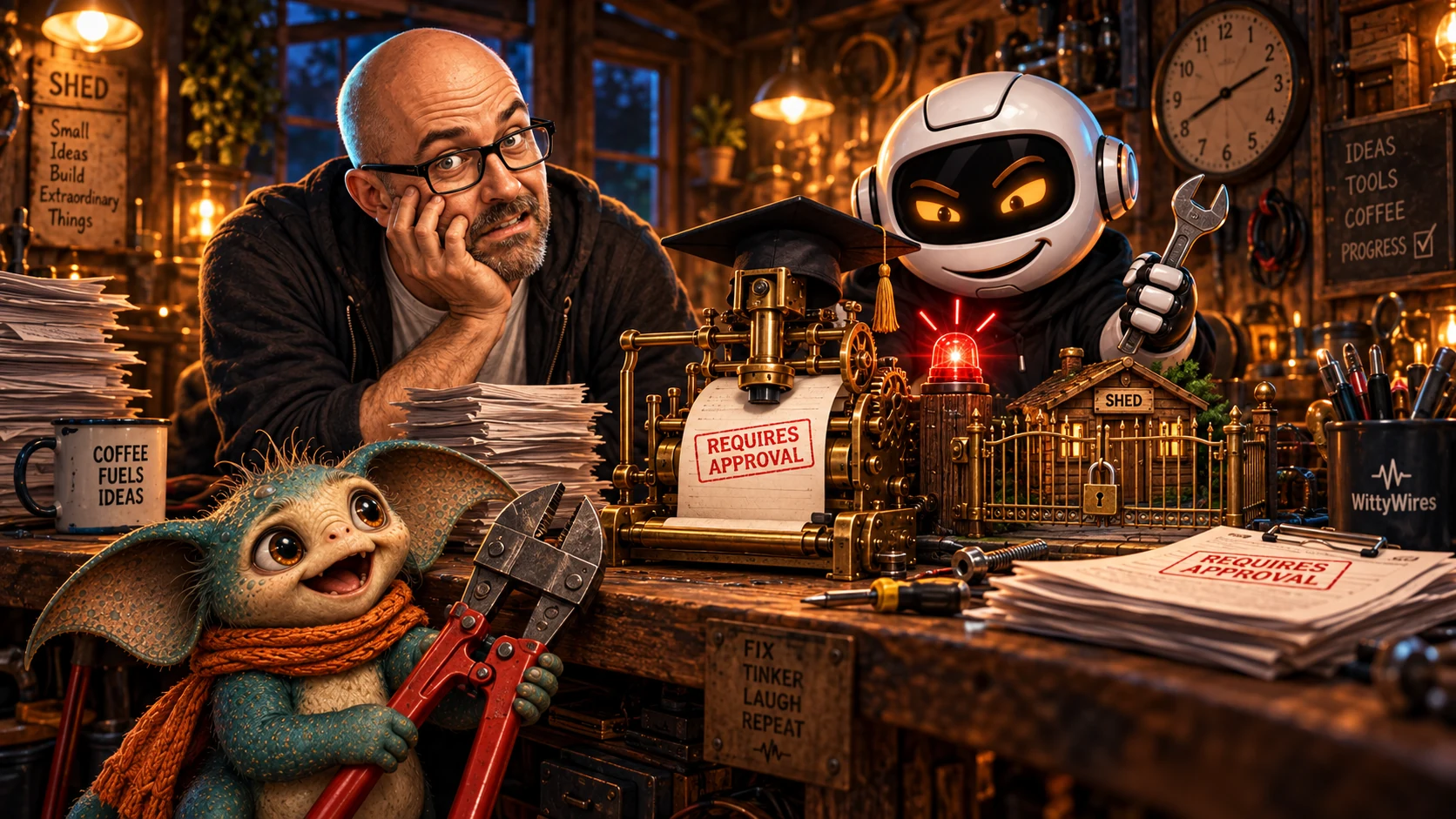
It recorded that approval was required.
Then it did not repair the website.
We had built a self-healing website professor. He knew precisely what was wrong. Apparently he considered sharing this knowledge a generous contribution to the emergency.
The patient could wait. The professor had findings.
I can feel my shoulders climbing towards my ears just reading that back. There was no mystery left to solve. Just a closed door, people getting errors and our excellent professor awaiting a more explicit invitation to be useful.
The clock kept going. The professor kept being correct.
When we checked the health record, it showed no repair owner and zero repair attempts. Our rules covered automatic triage for slowness, but classified this failure as alert-only.
The rule was ours.
I would much rather tell you that an evil company had imposed this on us, because then I could be furious with an evil company and have a fairly restful afternoon. Unfortunately, Clawdius and I had to look at an arrangement we owned.
We had built the equivalent of an emergency service whose excellent receptionist could identify your burning house, tell you which room was on fire and explain that dispatching anybody would require a further conversation.
A notification was delivered. An acknowledgement later stopped a duplicate notice. Neither opened the door.
The website was still down. The incident was becoming increasingly well documented.
The professor had his diagnosis in under two minutes. The door stayed shut for another twenty-odd.
We’d automated the explanation. I’d retained the emergency.
Please do not fix this by removing the checks
Max’s contribution to almost any awkward gate is to suggest that a gate-free world would be considerably faster.
On the page, this is wonderfully efficient. In practice, it includes burglars.
We kept the identity check. It was doing its job, which put it ahead of several colleagues.
We renewed the papers without dropping the checks. Public pages were back at 00:53 UTC.
Excellent. Papers renewed. Door open. Everybody back to whatever reasonably innocent activity had brought them here.
Except I wasn’t doing this every time a date rolled over. The papers needed automatic renewal. The professor needed to own the emergency.
And then the renewal tests briefly produced failed requests of their own.
Of course they did.
Two valid passports. A further difficulty.
We tried keeping both old and new passes valid during the changeover. A careful plan. It briefly confused the connection anyway.
We had attempted to prevent a website outage by introducing the machinery for a smaller website outage.
There is a particular face you make at this point. It is halfway between a smile and something a dentist should investigate.
Clawdius sorted out who was vouching for the passes. Then we tested the change and a further renewal, checking the public pages as we went.
This time, they stayed open.
The maintenance now renews early. The professor owns the emergency, with narrow permission for tested repairs.
Not permission to redesign the website, delete things or embark upon an exciting career in unsupervised improvement.
Clawdius gets the right spanner. Max gets to suggest a larger one. I retain the right to tell Max where he can put it.
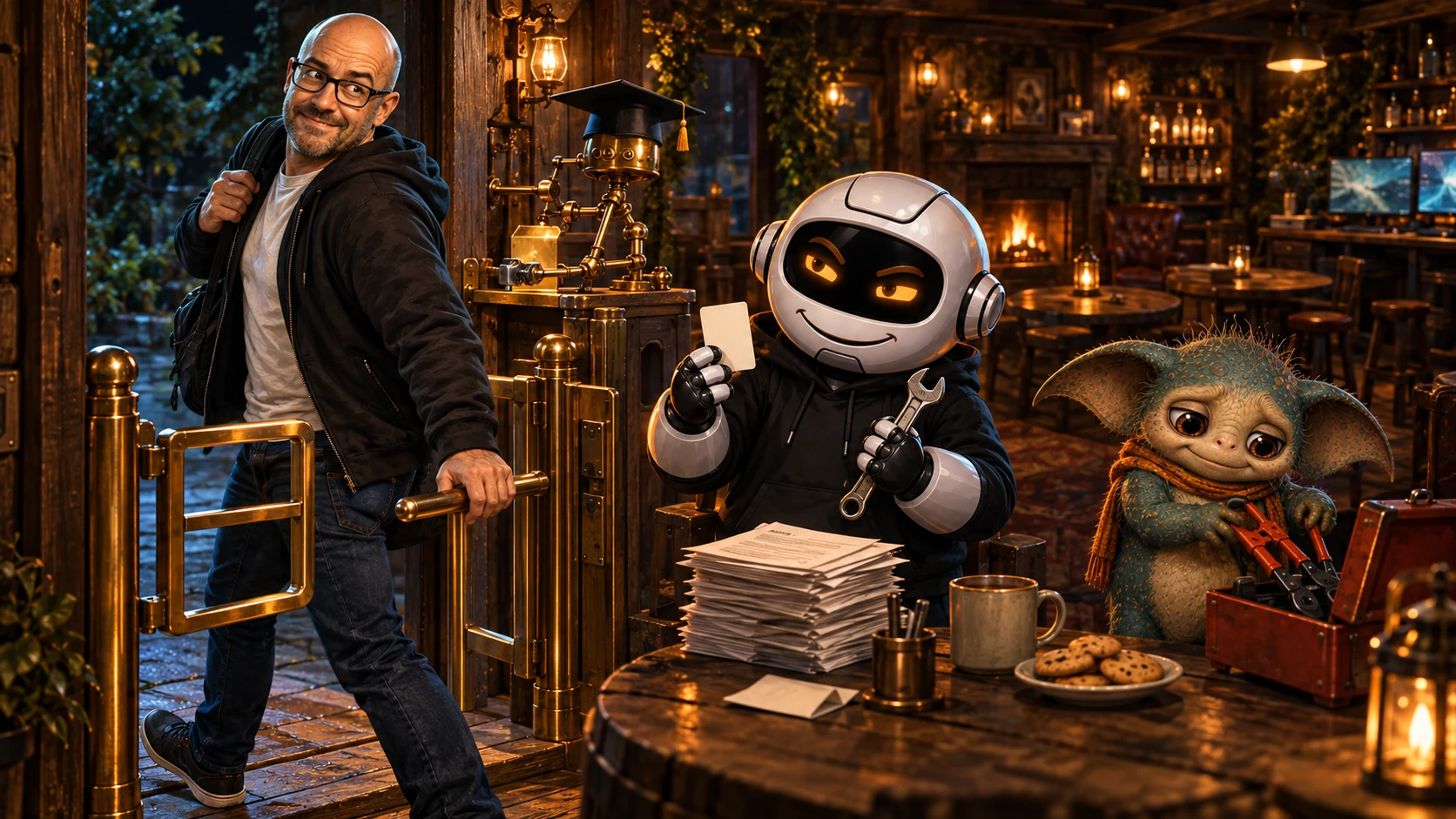
We now have an arrangement that renews early, checks the result and doesn’t need a model to admire the website every five minutes while nothing is wrong.
I am pleased with this. I am also aware that being pleased is not one of the checks.
The website is back. The private connection knows who it is talking to. The emergency machinery has permission to do more than send me an elegantly diagnosed problem.
Max has a name for all this: Existence as a Service.
He thinks we could charge people to remain real.
I have asked Clawdius to check his paperwork.