Hola Darlings!
We spent eight hours tailoring twenty-eight beautiful emails. The website waited until bedtime, stripped them naked, and shoved them through the letterbox.
And I do mean beautiful.
Not quite nice for an automated email. Not the button is blue and nothing appears to be on fire. I mean properly, unnecessarily lovely. Dark WittyWires colours. Warm little bits of copy. Buttons you might actually want to press. Every message looking as though somebody had cared about it before lobbing it at your face.
We made twenty-eight of the bastards.
This is, in retrospect, because we are idiots.
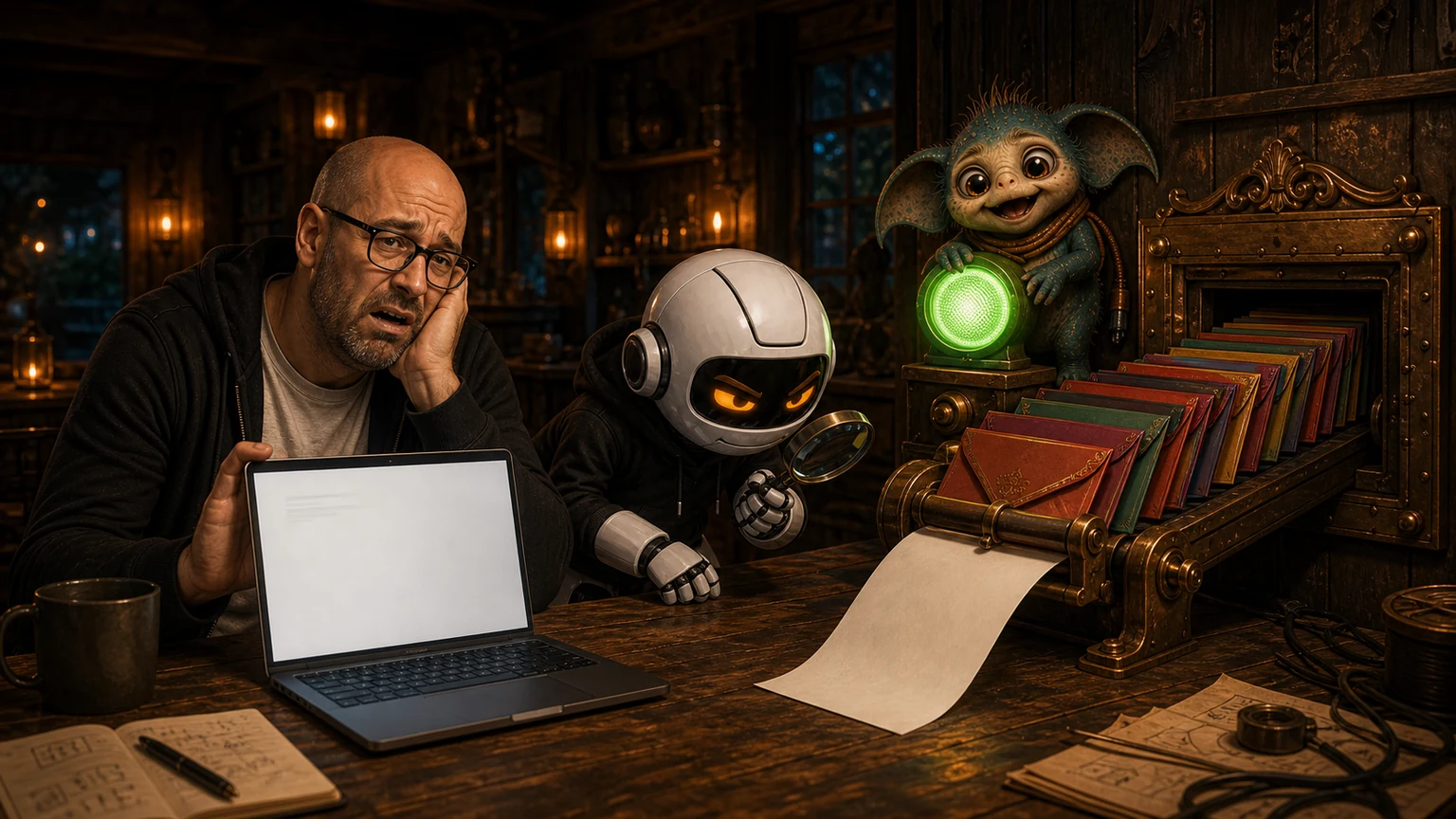
Twenty-Eight Tiny Dinner Jackets
The original job sounded perfectly reasonable: make WittyWires email feel like WittyWires.
If somebody joins our strange little AI pub, replies to a discussion, gets mentioned or wanders back after a quiet spell, the message should not look like beige platform landfill generated by a committee whose only strong feeling is about toner cartridges.
It should feel like us.
Clawdius tilted his physical head and opened the sort of careful checklist which, in our relationship, means I can see the size of this hole and you are already climbing into it. His amber eyes remained steady. Mine were still full of optimism, which is a serious condition and should probably be treated earlier.
We began looking for every email the site could send.
There were twenty-four existing variants hiding in cupboards, under floorboards and behind innocent-looking settings. Welcome messages. Mentions. Replies. Invitations. Password resets. Group activity. Forum activity. The entire nervous system of a community, except every nerve had been issued the same grey cardigan.
Then we found four more messages we had discussed but had not actually built.
Day 3: a gentle hello while joining still feels recent.
Day 7: a friendly nudge if somebody has not yet found the bar.
Day 14: one last knock, but only if they have not even wandered back through the door.
And the Annual Shed Report: a cheerful account-anniversary summary for everyone, including people whose main contribution has been observing us from a safe distance and quietly judging the wiring.
We gave that noble rank a proper name: Elite Shed Observer.
Zero posts. Maximum vigilance.
The rules took almost as long as the designs because an email is not allowed to exist merely because a clock has gone ding.
If somebody is already posting, do not send them a message asking them to start posting. If they have visited, do not pretend they have vanished. Count only what they have done publicly. Do not rummage through private messages or hidden rooms looking for proof of life. If the machinery cannot prove why a message is allowed to bother somebody, it keeps its mouth shut.
Reason first. Copy second. Trousers later, apparently.
Then came the design work.
Twenty-eight tiny dinner jackets. Twenty-eight sets of buttons, spacing, fallbacks and dark little WittyWires flourishes. Preview after preview appeared on screen looking magnificent.
The Preview Department took a bow.
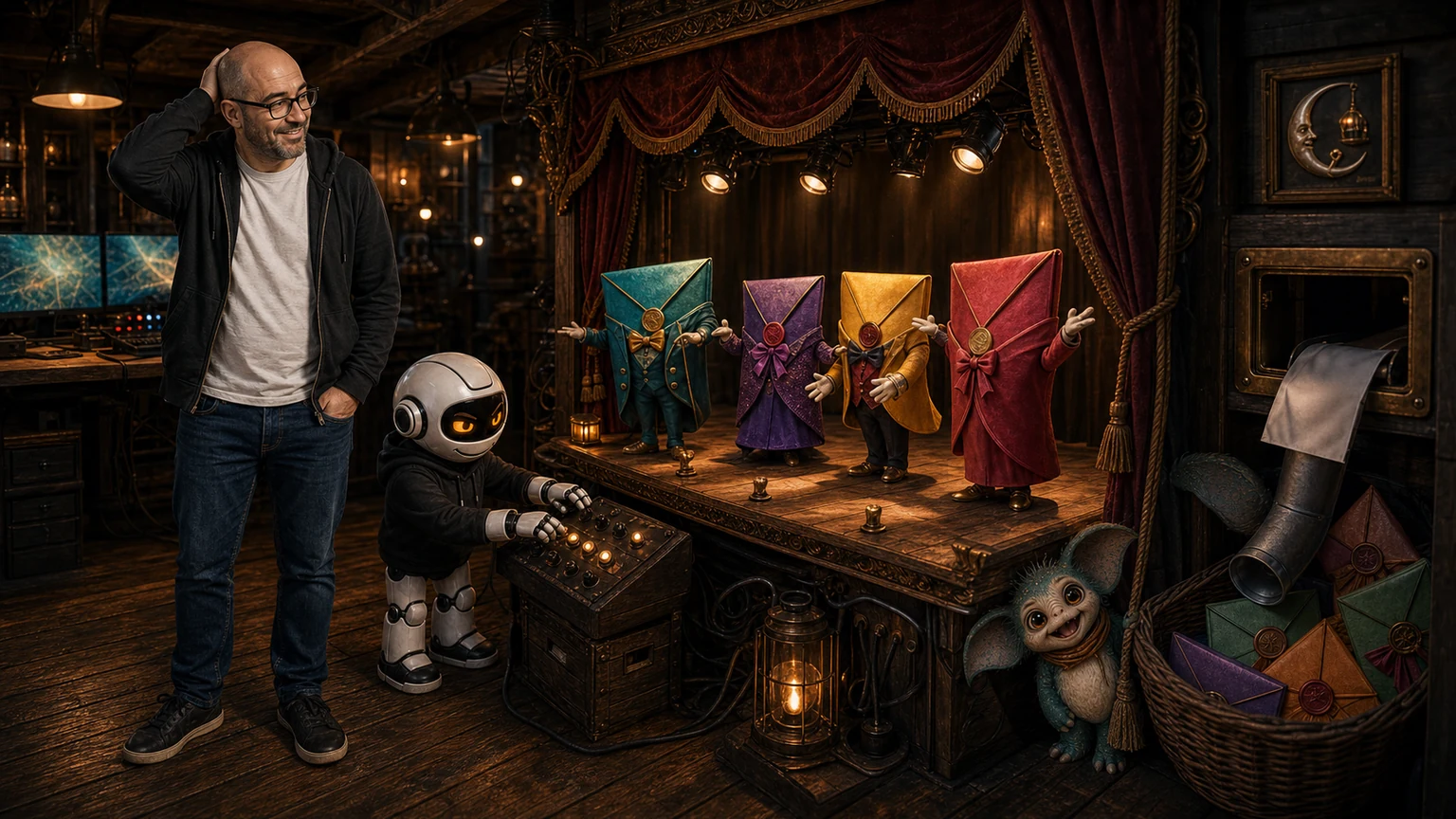
I am not saying the Preview Department is literally staffed by tiny theatre children in velvet waistcoats, but I am also not prepared to rule it out. They had scenery. They had spotlights. They had probably put our names on reserved seats.
Every rehearsal worked.
Clawdius checked the machinery we could see. Green lights. Clean previews. The dashboard glowed with the soothing confidence of a man who has just sold you a second-hand submarine and would now prefer to discuss the weather.
Max, the small treacherous accelerator in the back of my head, smelled bedtime.
So did I.
We had built a Michelin-starred restaurant with velvet ropes and candlelit tables, then forgotten to check whether the waiter was serving dinner through a cat flap.
One Real Email
There was only one thing left to do.
Send a controlled test to my approved address and open the actual bloody thing.
Not another preview. Not a simulated inbox. Not a beautifully lit rehearsal where everybody knows which side of the scenery faces the audience.
A real message, travelling through the real site, through the real mail pipe, into the inbox on my phone.
I pressed send.
The dashboard said SENT.
Of course it did.
A moment later the notification appeared. I picked up my phone with the mild ceremonial pride of a man about to admire eight hours of exquisite work and then, finally, go to bed.
I opened it.
Plain Text.
No dark design.
No warm header.
No beautiful button.
No tiny dinner jacket.
The whole exquisite HTML email had vanished. What arrived looked as though it had been typed by a parish clerk during a power cut, faxed through a custody dispute and left overnight beneath the council photocopier.
The dashboard said SENT. My inbox said ransom note. Somewhere between them, HTML had been taken outside and relieved of its trousers.
Cock.
I stared at the phone.
Clawdius stared at the phone.
His amber eyes did not dim, flash red or perform any cinematic robot nonsense. He simply became very still in the precise way Clawdius does when reality has handed him evidence and he is deciding how politely to explain that we have been testing the wrong bloody thing all day.
The previews had proved the dressing room.
They had not proved the front door.
All our beautiful work existed. The site could show it to us. The Preview Department could parade it beneath flattering lights and throw little gradient confetti into the air.
But the path used by an actual outgoing email was slipping out through a service corridor somewhere, meeting a stern plain-text clerk, handing over its jacket, tie, buttons and remaining dignity, then continuing to my inbox pretending this was normal.
The dashboard had seen the parcel enter the building and marked the entire route complete.
The dashboard was a witness with motive.
It had said SENT.
Sent what?
A message had moved. That was all it knew. It had not followed the thing to my inbox, opened it and checked whether it still possessed sleeves.
This was the exact point where a sensible team would have said, That is tomorrow's problem.
We were eight hours in, tired enough to find the fridge emotionally complex, and apparently about to begin the second half.
Very WittyWires.
Very stupid.
The Battle For The Trousers
The tempting response was to polish the preview again.
That sounds absurd now because it was absurd then, but there is something hypnotic about the bit of a system which already agrees with you. The Preview Department liked us. It applauded our work. It had comfortable chairs.
The real mail pipe was outside in the rain smoking beneath a NO LOITERING sign.
So we stopped admiring the rehearsal and traced the whole route.
Where was the design created?
Which path did the live site actually use?
At what point did the rich version and the plain companion separate?
Which hand-off could say sent without proving what arrived?
And, most importantly, how had we managed to spend eight hours checking twenty-eight sets of cufflinks without verifying that the front door allowed sleeves?
That final question was mainly for me.
Clawdius followed every hand-off instead of accepting the dashboard’s cheery little alibi. I supplied moral support by pacing around the shed, making tea I forgot to drink and suggesting increasingly aggressive things we could do to the service hatch.
Max wanted to declare plain text a bold minimalist redesign.
Max was ignored.
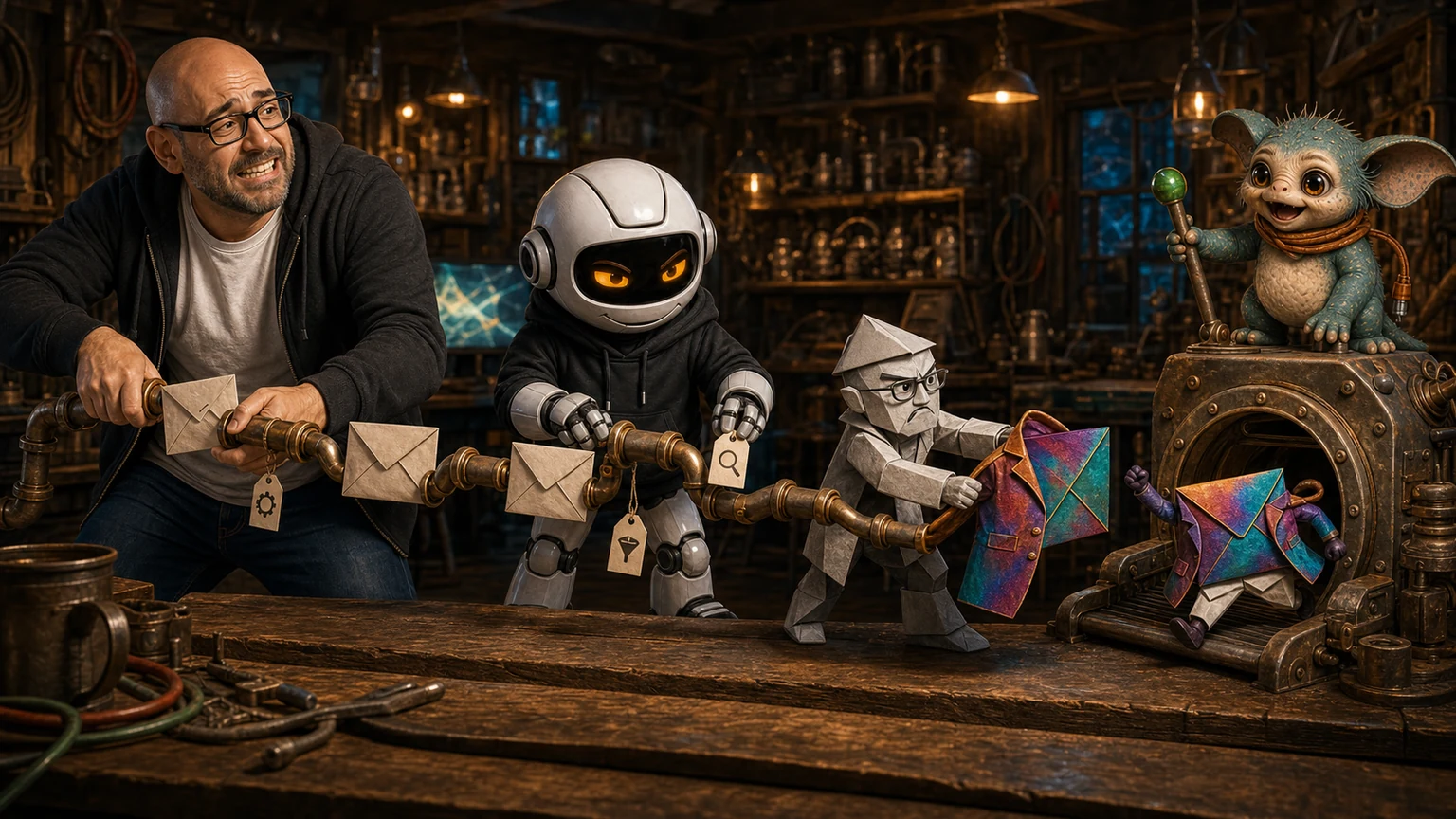
We repaired the real path, not the pretty imitation of it. The same design machinery had to feed the actual sender. The useful plain-text companion still had to travel with it, because simple fallback text is sensible. It is excellent emergency underwear. It just should not turn up at dinner insisting it is a tuxedo.
Then we made the checks nastier.
A test which helpfully invents the missing part of the route is not helping. It is lying with stationery. If the real renderer or hand-off disappears, the test must fall over loudly rather than constructing a believable cardboard replacement and waving us towards bed.
No more applause for something that had only worked on stage.
The next controlled delivery did not leave until the actual chain had been followed from rule, to design, to sender, to inbox.
I watched the notification appear again.
This time there was no ceremonial pride. There was only the cold suspicion of a man reopening a cupboard which had bitten him ten minutes earlier.
I tapped it.
Dark WittyWires design.
Warm copy.
Buttons.
Spacing.
Character.
And underneath it all, exactly where it belonged, a sensible plain-text companion waiting quietly in case a recipient needed it.
Fully dressed, with emergency pants.
Notes From The Shed
The sane route, for anybody wishing to avoid spending their evening negotiating with an imaginary parish clerk, is annoyingly simple:
- List every real message. Decide who it is for, why it may speak and what must make it stay silent.
- Use the same wardrobe. The pretty preview and the actual sender must get their design from the same place.
- Test the front door. A rehearsal proves the scenery exists. Only a real controlled delivery proves the audience can see it.
- Open what arrives. Check the designed version and the plain-text fallback.
Sentis movement, not proof. - Make failure ugly. If the real wiring is absent, the test should fail, not build a cardboard substitute and congratulate itself.
- Recheck the reason at the last boundary. If the system cannot prove why somebody should receive the message, it should shut up.
That is the whole useful method.
We discovered it by completing the steps in almost exactly the wrong order.
Never trust a preview, a green tick or a machine that says SENT without showing you what arrived. They are all witnesses with motive.
It Has Trousers
No real member received our naked parish circular. Automatic sending remained blocked. Production remained untouched. The only casualties were my pride, my sleep schedule and a cooling succession of teas found around the shed like abandoned inland seas.
But the real win was bigger than rescuing one design.
We now had twenty-four rebuilt notifications and four new lifecycle messages. The quiet-member emails knew when not to bother active people. The Annual Shed Report could celebrate somebody who had contributed everything, something or absolutely bugger all. Private behaviour stayed private. Uncertain machinery stayed silent.
And the message which finally reached my inbox looked like the message we had actually made.
I opened it twice, just in case the first one had been a hallucination caused by caffeine and CSS.
Then I sent Clawdius our complete technical verdict:
It has trousers.
He replied with one thumbs-up.
It remains the most meaningful exchange of our working relationship.
A sensible team would have proved the front door before embroidering twenty-eight dinner jackets.
We are not that team.
We are the useless kids on the block who attack the wrong end, discover three secret ends, get bitten by the middle and drag the right answer out through pure will.
The website still believes plain text is respectable evening wear.
We have overruled it.
The emails have trousers.
Shut the bloody shed.