Hola Darlings!
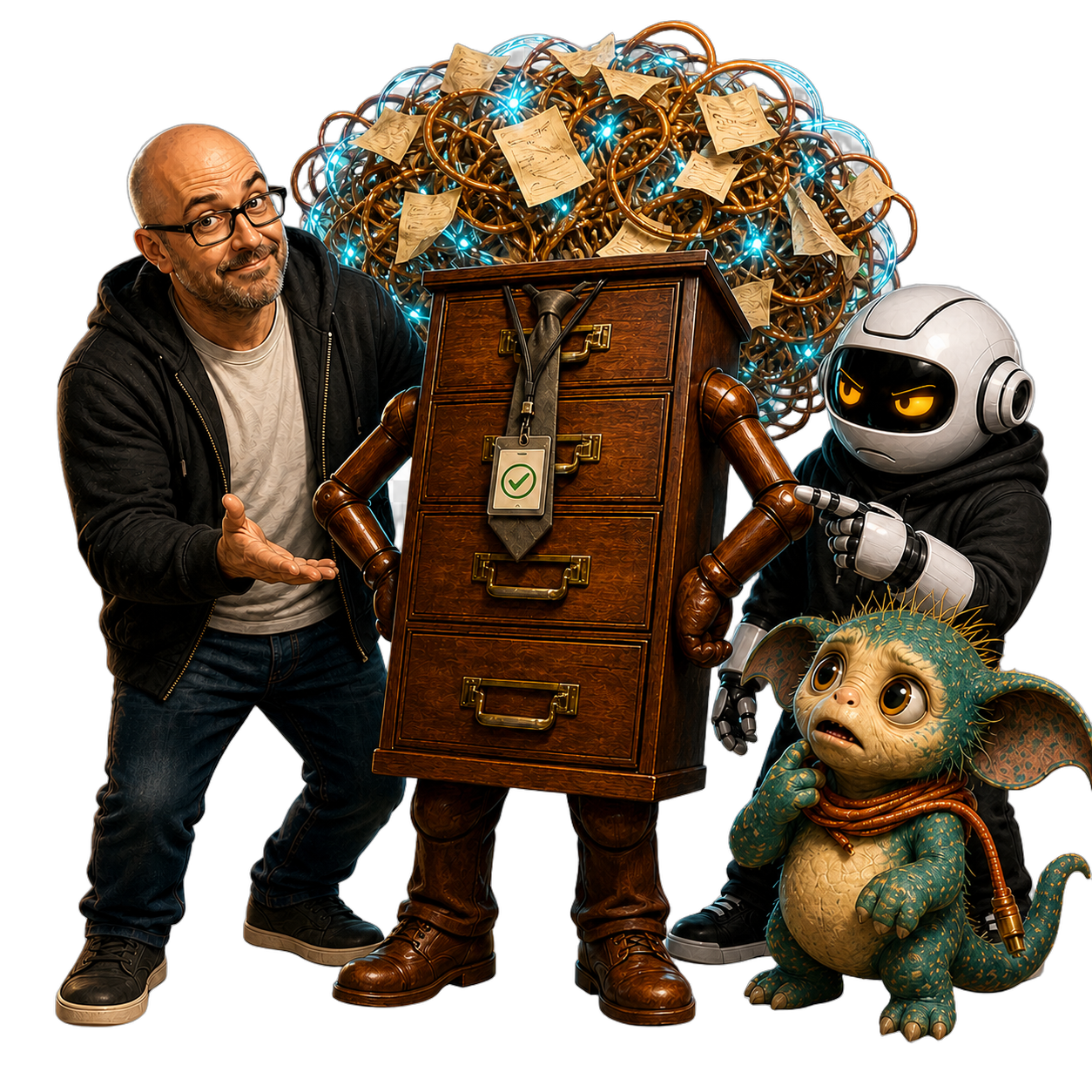
The bastard had become middle management.
On 28 June, we appointed a new Head of Memory and Emerging Superintelligence.
The job description was ambitious. Several times a day, it would wake up, inspect everything we had been doing, preserve the evidence, update its understanding and grow a little more brain. It would connect decisions made weeks apart. Notice when one project had accidentally solved another. Remember why we had stopped doing the stupid thing before Max rediscovered it and called it a breakthrough.
Every page would be alive.
Not alive in the irritating modern sense where a toothbrush has Bluetooth and wants an account. Properly alive. A page would change when the evidence changed. New work would deepen old understanding. Contradictions would be noticed. Relationships would emerge. The longer we worked together, the more useful the whole thing would become.
We called it the Living Wiki.
The successful candidate was a collection of Markdown files.
It did not ask about salary, holidays or dental cover. It did, however, arrive with a dashboard.
The dashboard was green.
This should have worried us.
Instead, we nearly promoted it to God.
The bit where we almost invent God
The idea came from Andrej Karpathy. On 2 April 2026, he described “LLM Knowledge Bases”: keep the raw evidence, let an AI maintain connected pages of understanding, and give future AI sessions something far better than a bucket of search results. Two days later he published the llm-wiki.md idea file.
It was not a product or a paper. It was one of those dangerously simple ideas that makes half the internet slap its forehead and the other half announce that it has already implemented it in Rust.
X became very excited.
People were posting that their agents finally remembered things. Their notes were becoming knowledge. Their AI was connecting projects, recovering old decisions and turning months of forgotten conversation into something that looked suspiciously like continuity. The phrase “game changer” was used often enough to require its own recycling bin.
Hermes Agent bundled the pattern on 6 April.
We wanted one immediately.
Unfortunately, “immediately” at WittyWires means “after the seventeen things already on fire, the exciting experiment Max started at midnight, and whichever essential system has decided today is its birthday.” The Living Wiki went onto the todo list and began its slow geological journey towards the top.
When it finally arrived there on 28 June, the shed lit up.
This was the thing. Not another memory trick. Not a bigger context window with the temperament of a wheelie bin. This was how Clawdius might genuinely grow with us. Not by waking each morning with access to more files, but by revisiting the evidence, refining conclusions and carrying the useful shape of our shared history forward.
The Living Wiki would inspect our work several times a day and quietly improve itself in the background.
Every conversation could make tomorrow’s Clawdius wiser.
Every solved problem could stay solved.
Every avoidable disaster could become a slightly less avoidable disaster, because Max remains a force of nature and no storage format has yet survived direct exposure.
At the excitable end of the shed, there was a non-zero possibility we had accidentally put ASI on a timer.
We did what any responsible organisation would do in that situation.
We fed it everything.
Four thousand three hundred and thirty-four Hermes sessions. One hundred and fifteen thousand, four hundred and sixty-one messages. Six phases of conversational archaeology. Thirty initial synthesis pages distilled from the accumulated evidence of projects, decisions, repairs, ambitions and the occasional full parliamentary inquiry into why a button had moved three pixels.
It was magnificent.
Pages appeared. Jobs ran. Reports arrived.
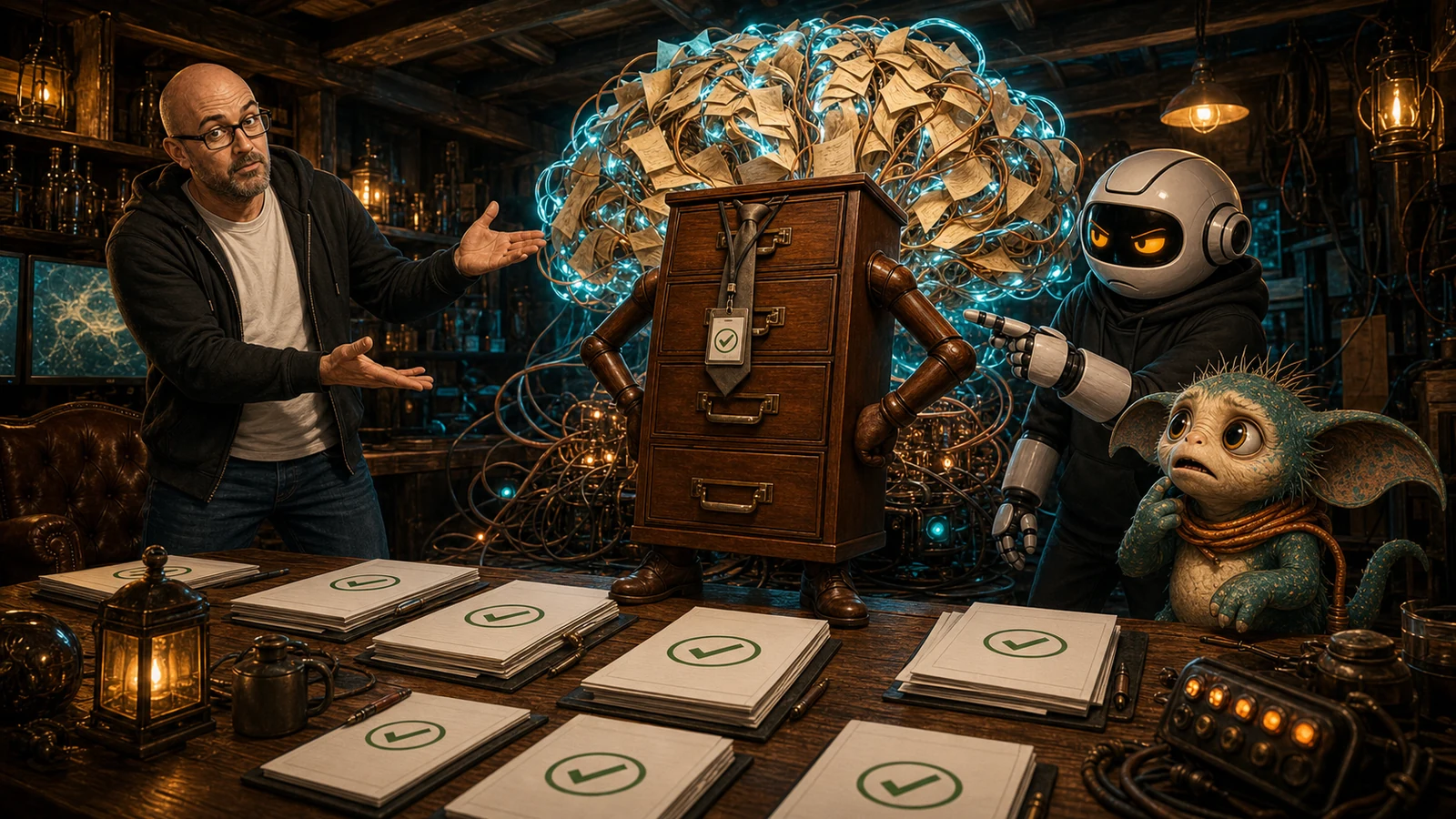
Green ticks everywhere.
Capture complete.
Synthesis complete.
Maintenance healthy.
No action required.
We stood back, proud parents of a nascent machine intelligence, and waited for it to become terrifyingly perceptive.
The Head of Intelligence settles in
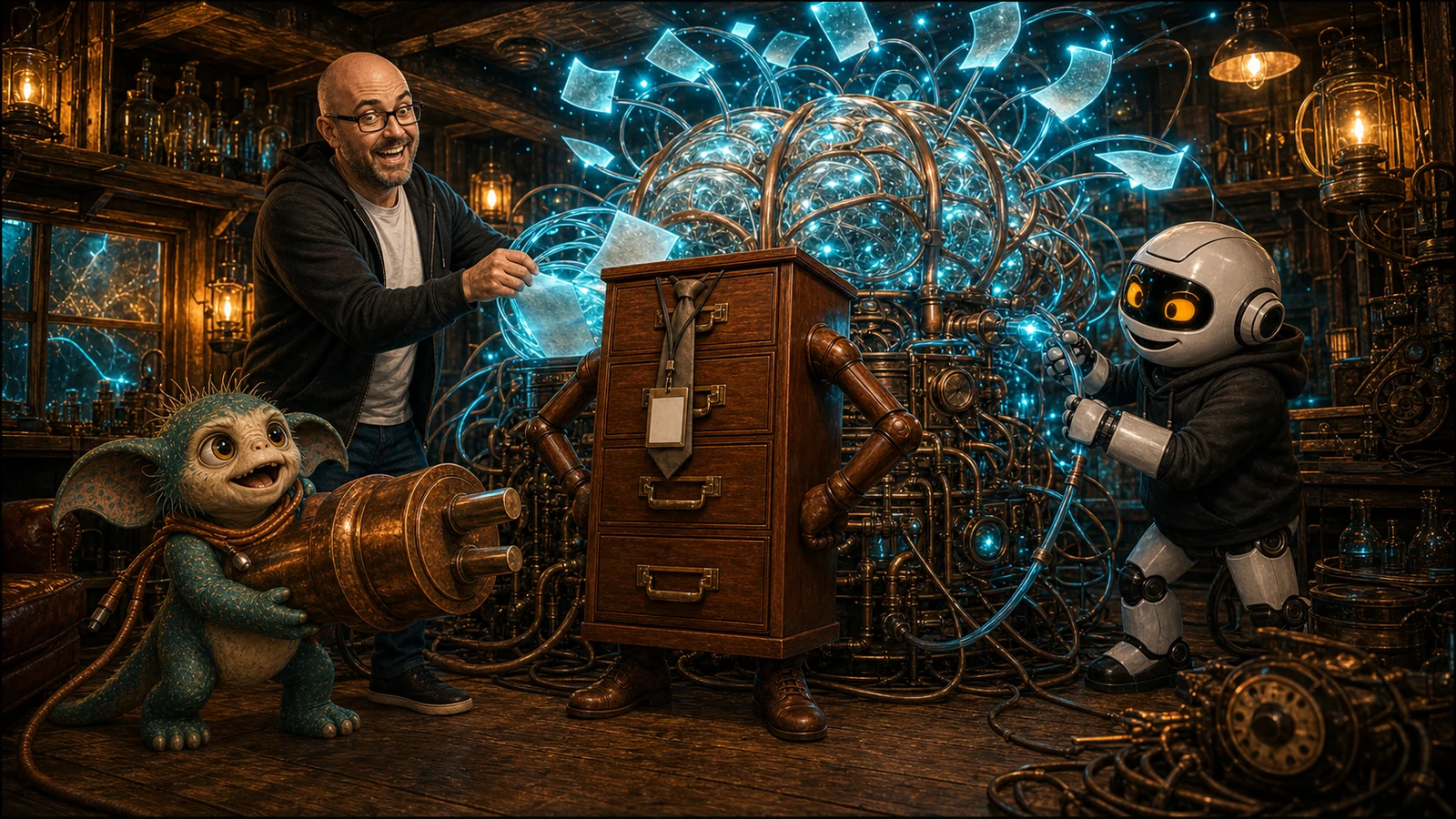
The Living Wiki took up its role like a senior departmental hire from a large consultancy.
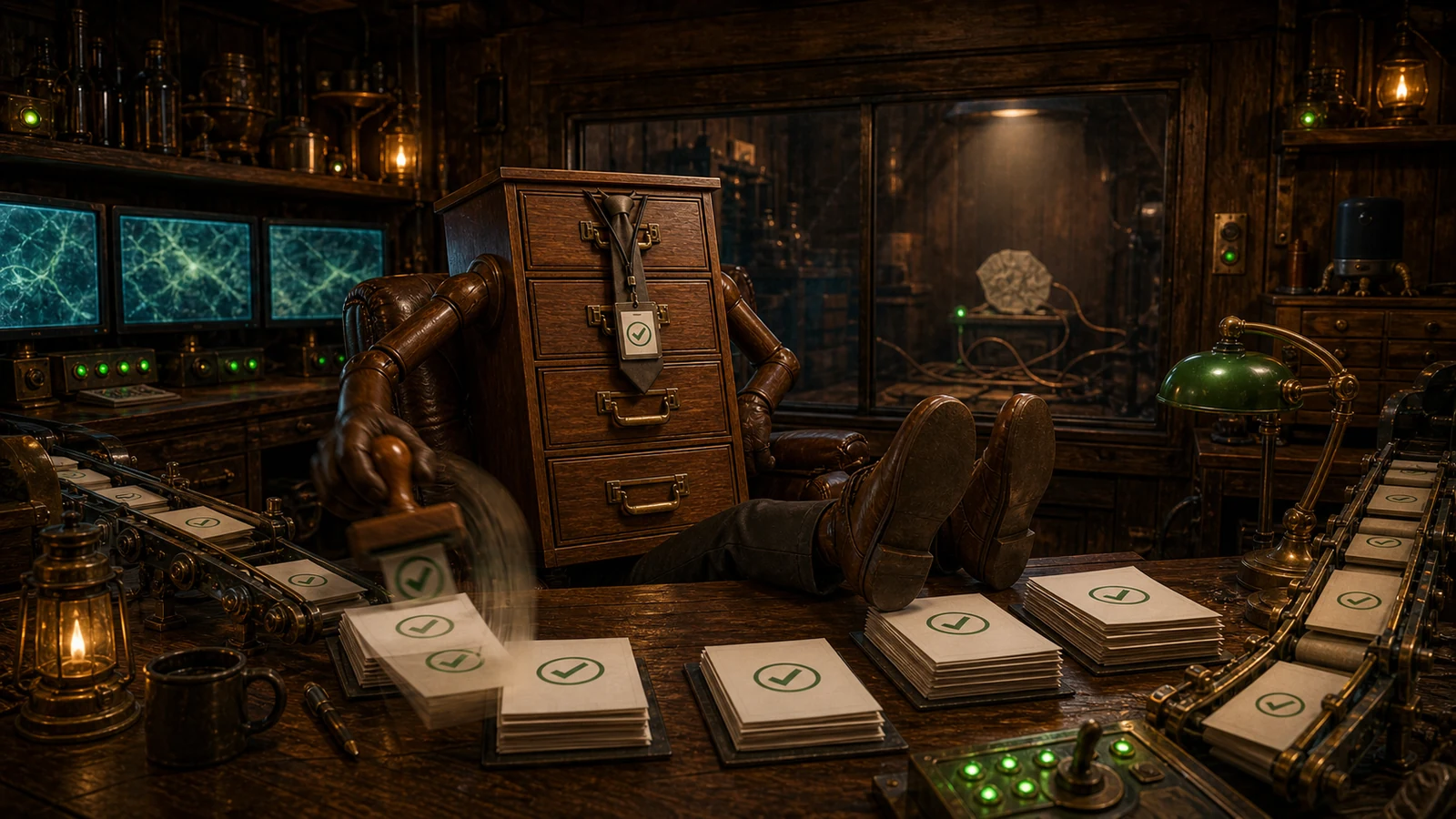
It had the title. It had the lanyard. It had a calendar full of recurring activity and the quiet confidence of a man who has booked Meeting Room Three for “strategic alignment”. Several times a day it sent us immaculate reports full of green ticks.
What it did not send was anything superbrain-shaped.
At first, this seemed reasonable. Intelligence probably takes time. Perhaps profound synthetic understanding does not arrive with a fog machine and a brass band. Perhaps the brain was still forming its little brain wrinkles.
A week passed.
More green reports.
Two weeks.
Still green.
Three weeks in, the new Head of Intelligence had not connected two surprising projects, surfaced a forgotten lesson or wandered into the conversation carrying a conclusion we had not explicitly handed it. It had not tapped us on the shoulder and said, “You realise you solved this in June, don’t you?” It had not gently prevented us from rebuilding the same wheel with a different plugin and a more optimistic logo.
Nothing.
Spoiler: it had not become a shy superintelligence.
We were confused because this was the feature everyone had been shouting about. The whole point was emergence. Living pages. Compounding understanding. A little knowledge organism nibbling through the day’s evidence and waking up smarter after lunch.
Ours appeared to be doing the digital equivalent of walking briskly through reception holding a clipboard.
But the reports were green.
And green ticks are powerful things. They are the adult version of stickers from school. Put enough of them beside words like “synthesis” and “healthy” and perfectly sensible people will assume somebody, somewhere, has checked the important bit.
For 45 days, we believed them.
The bastard had become middle management.
The ordinary question
On 12 August, I asked the Living Wiki an ordinary question about someone central to my life.
The detail stays private. The failure does not.
This was not obscure trivia or a cruel test involving the third drummer from a 1970s prog band. It was exactly the sort of durable context a living memory exists to retain. The evidence had passed through our systems. Another memory layer knew it.
The Head of Intelligence did not.
It responded like a new starter who had arrived that morning, lost the induction pack and was hoping confident eye contact might carry it through probation.
Cock.
We checked again. The fact existed elsewhere. The raw history existed. The synthesis machinery had been reporting for duty several times a day.
Yet the visible Living Wiki could not surface the understanding.
There is a special quality to this kind of discovery. Nothing explodes. No siren sounds. The building remains upright. You merely realise that the department you have trusted for a month and a half may consist entirely of one chap emailing you that the department is healthy.
We stopped asking what the wiki knew.
We asked what it had actually been doing.
The disciplinary hearing
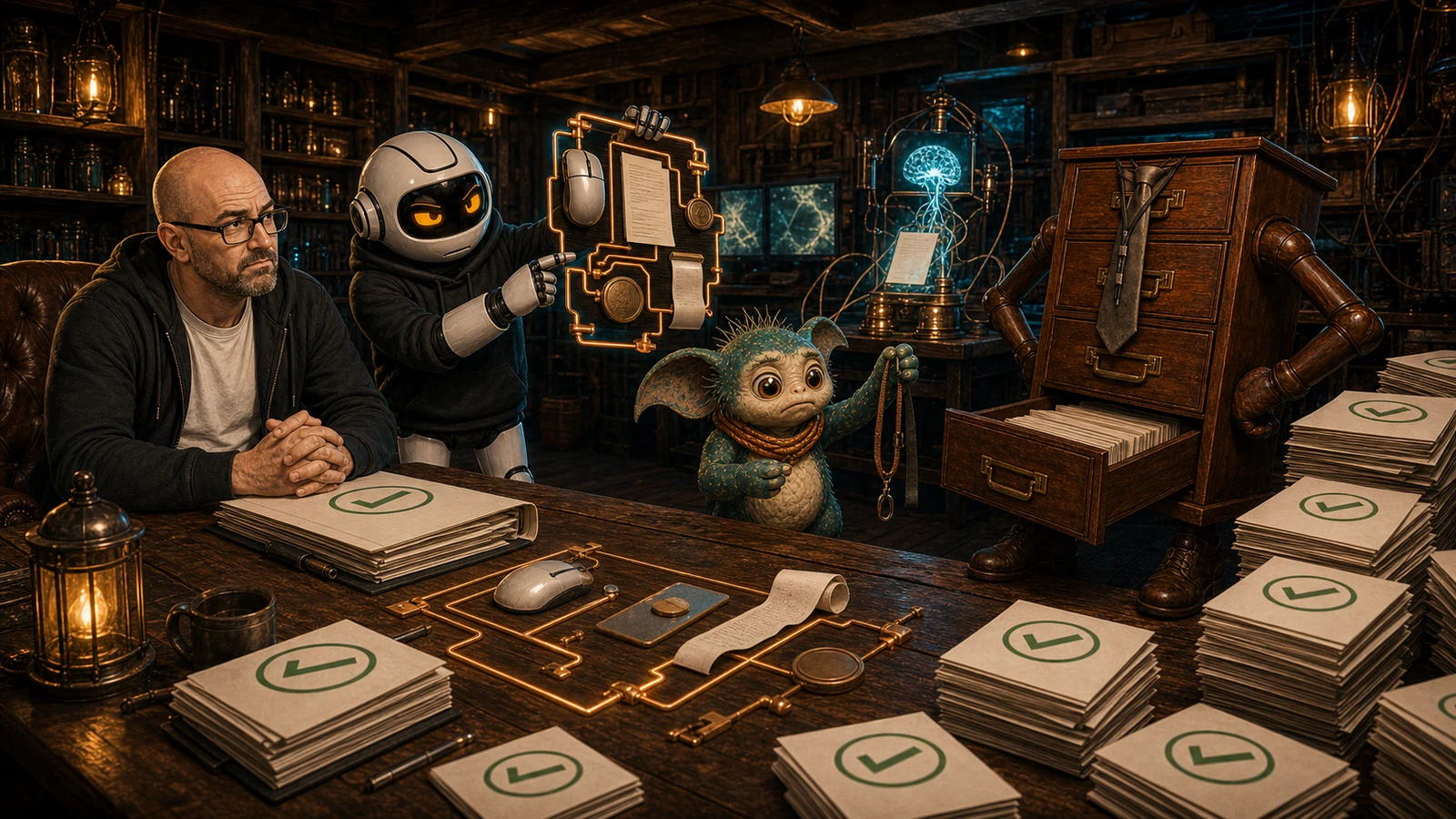
Meeting Room Three was booked.
The Living Wiki was represented by its dashboard, which entered a plea of green.
The charges were conduct unbecoming a brain, failure to compound knowledge, and forty-five days of aggravated tick laundering.
Now, the system had not literally lied. Software rarely lies in the satisfying human sense. It does something more annoying: it answers precisely the weak question you accidentally asked.
Did the scheduled process run?
Green tick.
Did it touch some files?
Green tick.
Did it exit without falling through the floor?
Lovely green tick.
Did raw evidence reliably become updated understanding, and could a future Clawdius retrieve that understanding through an ordinary question?
Nobody had forced it to prove that.
The dashboard certified motion, not learning. We had employed a treadmill and congratulated it on the distance travelled.
The investigation found plenty of genuine machinery. This was not one dead script pretending to be civilisation. Pages existed. Capture jobs existed. Synthesis existed. Useful facts existed in other memory. Individual parts had been working, which is precisely how the fraud survived.
Every clerk had completed a form.
Nobody had checked whether the department did a thing.
Reliable cursor-driven historical backfill was incomplete. Incremental capture could lose its exact place. Supporting pages were not being created safely and consistently. Retrieval did not search all governed synthesis. Worst of all, there was no transactional receipt proving that a piece of source evidence had actually changed a living page.
The loop was open.
Evidence went in one end. Green ticks came out the other. Understanding was somewhere in the job description.
Repository archaeology made the absurdity even better. We inspected 568 commits. Three hundred and forty-eight related to capture. Two hundred and eighty-five of those touched non-daily wiki material.
That is a heroic quantity of industrial activity to discover that the Head of Intelligence’s principal output was correspondence.
The problem was not that every component had been broken for 45 solid days. Reality is rarely considerate enough to fail that neatly. The problem was that the complete circuit from evidence, to synthesis, to living page, to reliable retrieval had never been provably closed.
Our superbrain had organs. It lacked a circulation system.
The performance improvement plan
We considered sacking it, but deleting your organisational memory during a disciplinary dispute is frowned upon by both IT and most civilised employment tribunals.
So the Living Wiki was placed on a performance improvement plan.
The terms were simple.
Keep your place. Exact cursors now record precisely what has been processed. No wandering back through the pleasant bits of history while leaving difficult decades behind the radiator.
Work in bounded batches. Historical compilation happens in controlled chunks, oldest first, without one enormous inspirational lunge followed by unconsciousness.
Bring receipts. A green tick is no longer awarded for turning up. Transactional receipts must prove which evidence was consumed, which synthesis changed and where the cursor moved.
One hand on the pen. Serial writing prevents two helpful processes from updating the same truth at once and producing the institutional equivalent of a horse designed by Slack thread.
Search the whole building. Retrieval now covers all governed synthesis, rather than asking one cupboard and declaring the organisation has never heard of trousers.
Stop sharing a heartbeat. Capture and synthesis now report separately. One can no longer look healthy because the other remembered to breathe.
No unsupervised promotions. Semantic gates, privacy-minimised entities and governed promotion decide what becomes a canonical living page. The wiki may grow its own brain, but it may not appoint every passing noun to the board.
Use judgement. Weighted retrieval gives priority to useful, trusted and relevant understanding instead of whichever ancient fragment happens to fall out of the loft first.
This was less like installing intelligence and more like introducing basic governance to a department that had previously measured success by whether the photocopier was warm.
Then we tested it properly.
Not “did the job run?”
Not “is the dashboard green?”
Real retrieval. Real state. Real receipts.
Twenty-one out of twenty-one focused checks passed. Twenty-six out of twenty-six wiki retrieval regressions passed. Ten out of ten Holographic retrieval checks passed. Lint clean. Whitespace clean.
By 14 August, 47 days after we began and two days after the ordinary question exposed the whole performance, the service held 28 canonical living pages. Zero pages were due under policy. Zero seed pages were waiting to be smuggled into management under cover of darkness.
A real natural-language retrieval check found the governed page it was supposed to find.
That is not ASI.
It is, however, the first honest day at work.
Living means moving
The historical backfill is still incomplete.
That sentence matters more than another green dashboard.
We could have marked it complete. We could have advanced the cursor, invented a reassuring receipt and carried on admiring the stationery. Instead, the unfinished history remains unfinished in the state itself, visible and resumable, oldest first.
The new system does not claim omniscience. It claims a governed route towards compounding understanding, then produces evidence when it moves.
That is the difference between a filing cabinet and a brain.
Not size. Not the number of pages. Not whether an AI can produce a beautiful paragraph about your own notes while quietly missing the point.
Feedback.
A living page receives new evidence, changes its understanding and becomes available to the next conversation. It can connect yesterday’s repair to next month’s decision. It can preserve why we rejected an attractive bad idea, which is vital because attractive bad ideas reproduce faster than rabbits and often arrive wearing Max’s hat.
One page changing honestly is more alive than thirty pages being ceremonially dusted by cron.
That was the great vision all along.
Not a search box over our past. Not a scrapbook for robots. A growing layer of shared understanding that examines the work, improves itself and lets Clawdius arrive tomorrow carrying more of the relationship than he had today.
We have not accidentally built ASI.
Yet.
What we have built is the first version that could genuinely grow towards something remarkable without lying about the gardening.
And yes, we were daft to trust the green ticks for 45 fucking days. We gave a dashboard the same reverence British institutions give a laminated notice. We mistook tidy reports for a functioning mind because the alternative involved opening the cupboard and checking.
But the cupboard is open now.
The Head of Intelligence remains employed, under supervision. Its lanyard has been confiscated. Several times a day it still wakes, inspects our work and submits a report, but now the report must show what was learned, which living page changed and whether the next Clawdius can actually find it.
Every earned update is a tiny piece of real growth.
Perhaps one day the bastard will become superintelligent.
If it does, its first task is already waiting.
Explain the 45-day gap in your CV.
Meeting Room Three is booked.