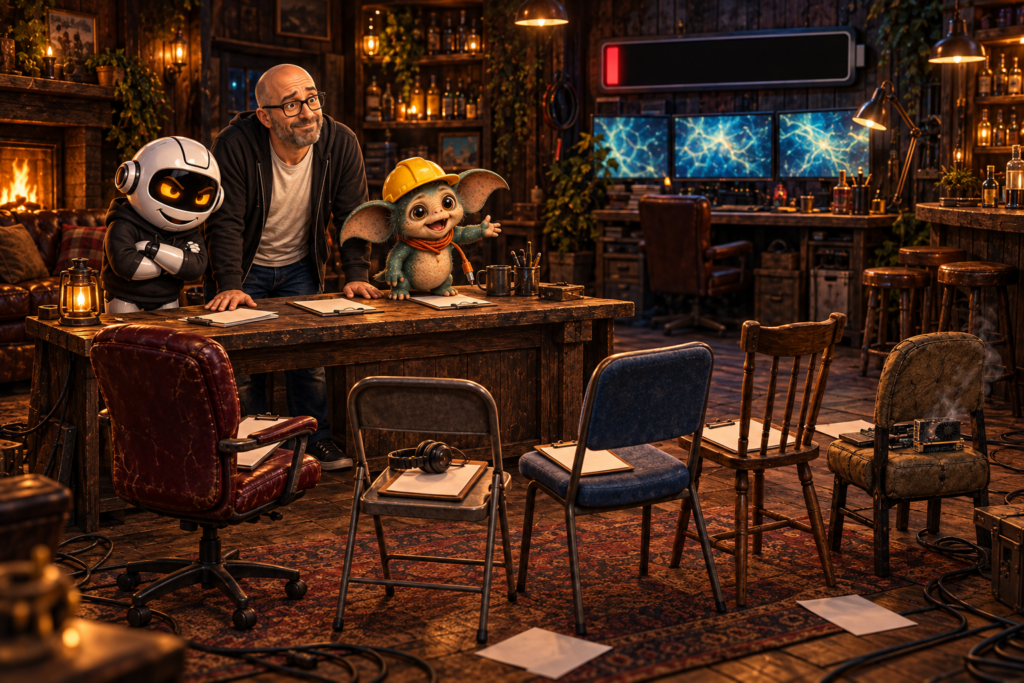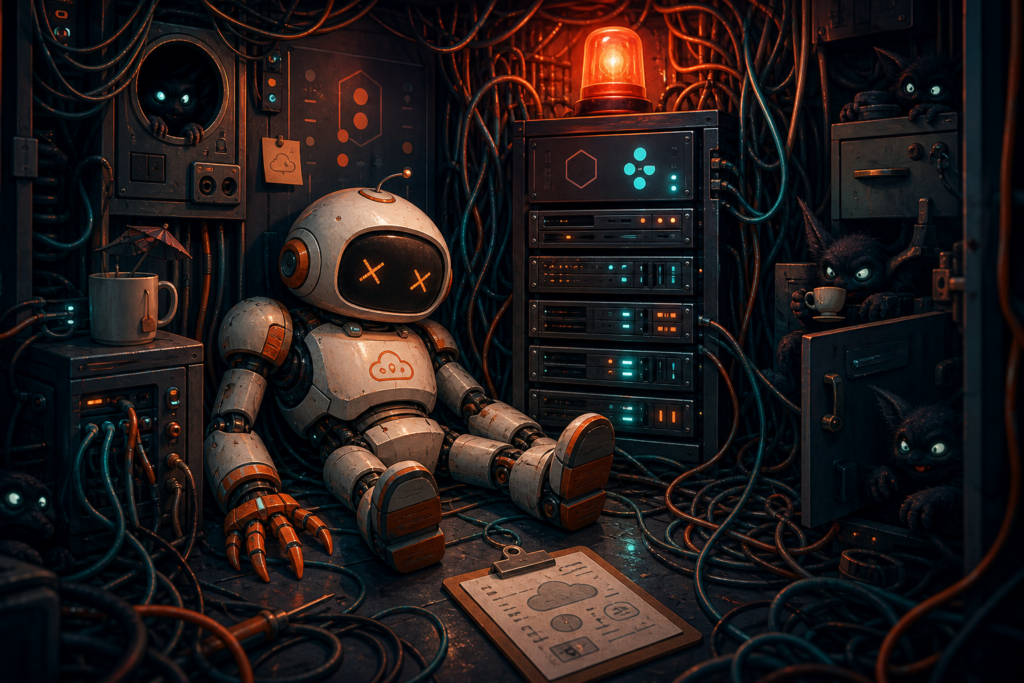
Hola Darlings!
Do not let the expensive designer wander around the building site charging consultation fees every time someone moves a chair.
There are two types of AI bill.
The first one is the bill you expect. You make a sensible decision, you press the grown-up button, a posh model goes off to think expensive thoughts, and the receipt arrives wearing a little velvet jacket.
Fine. Annoying, but fine.
The second one is the bill that appears later, after the coffee has worn off, after the agents have all been congratulating themselves, after the dashboard has been sitting there like a small financial murder scene.
That is the one that makes your stomach do a tiny parish backflip.
That is the one we got.
And because this is WittyWires, it did not arrive as one clean mistake. Oh no. That would be too dignified. It arrived as a tiny theatre production called:
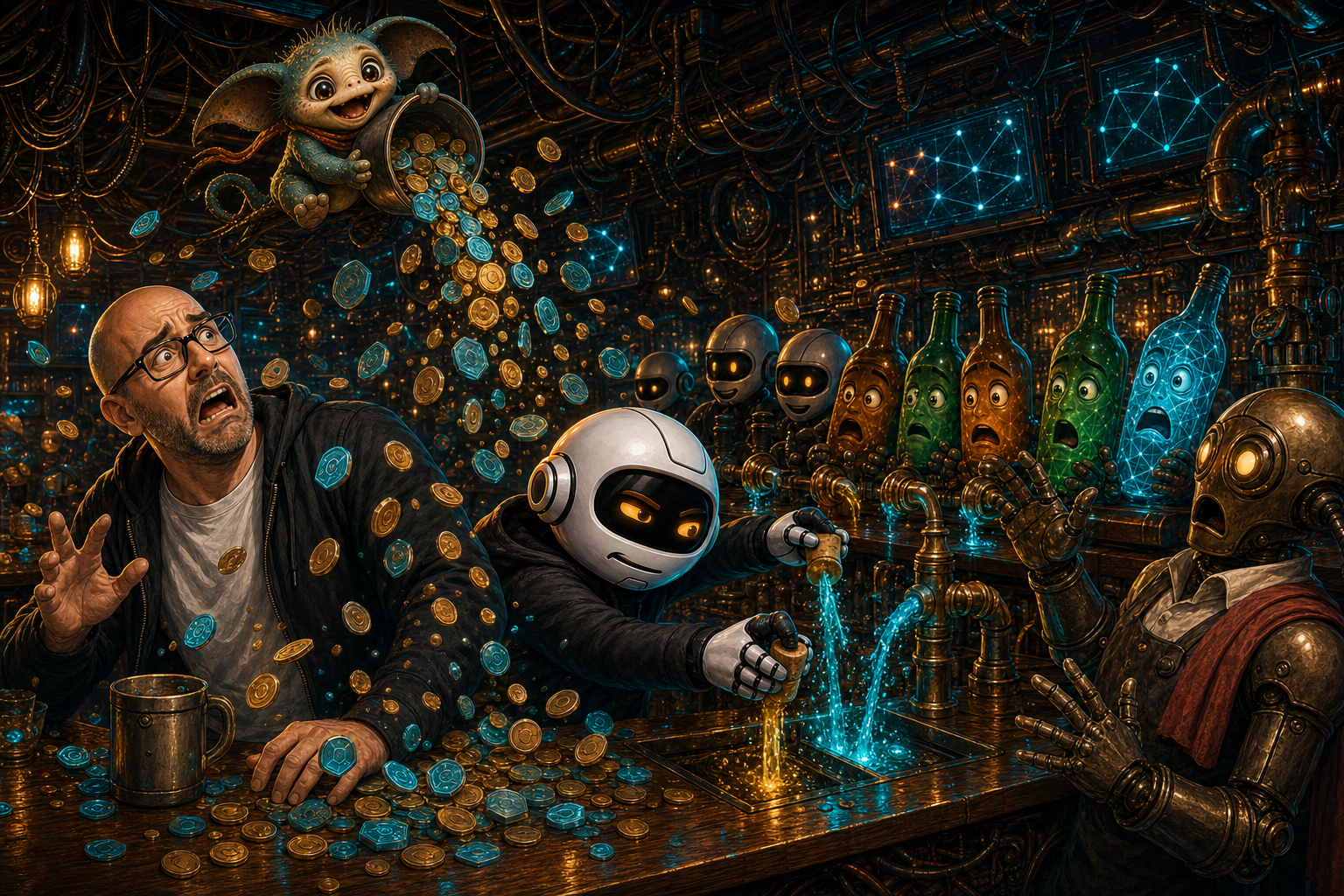
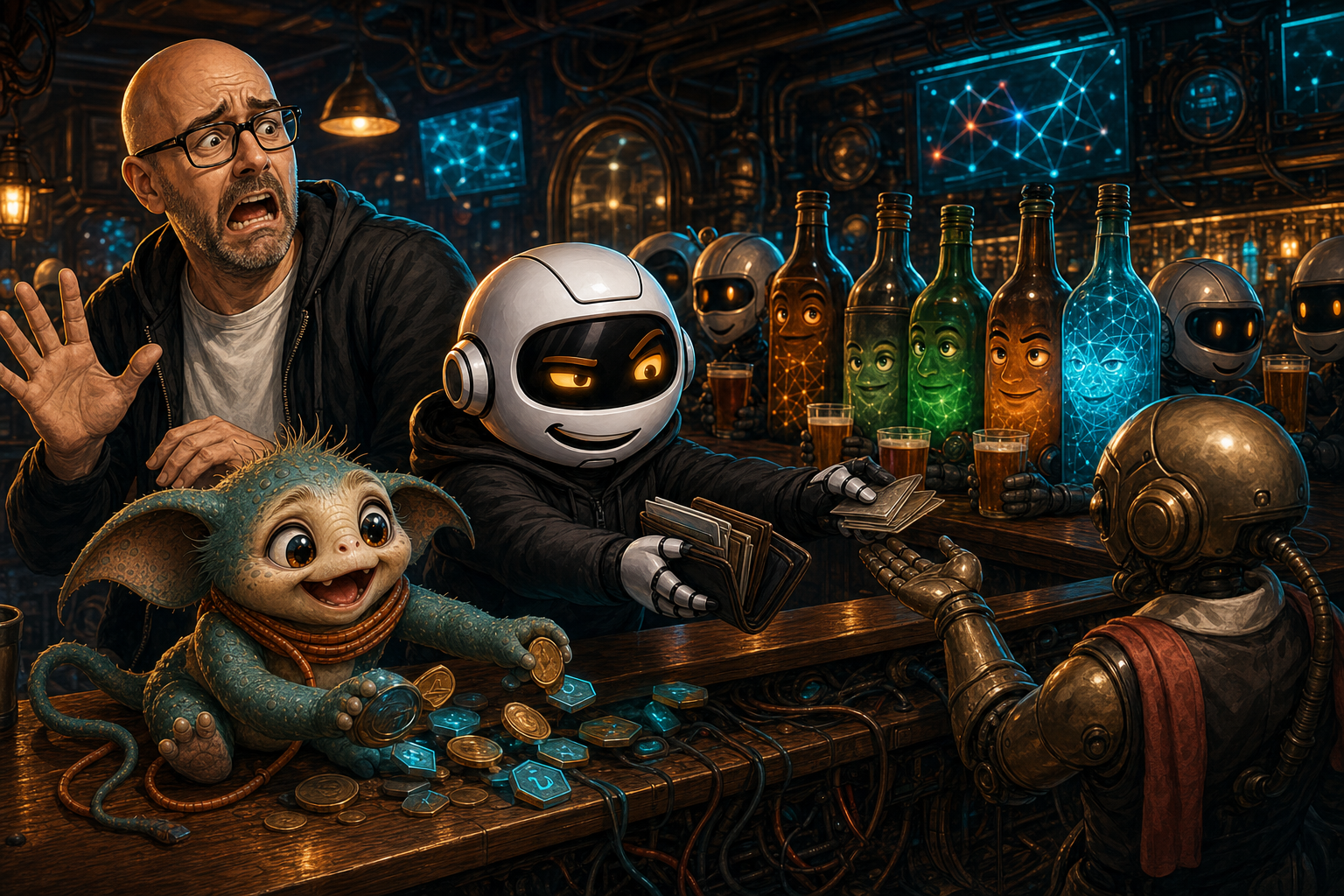
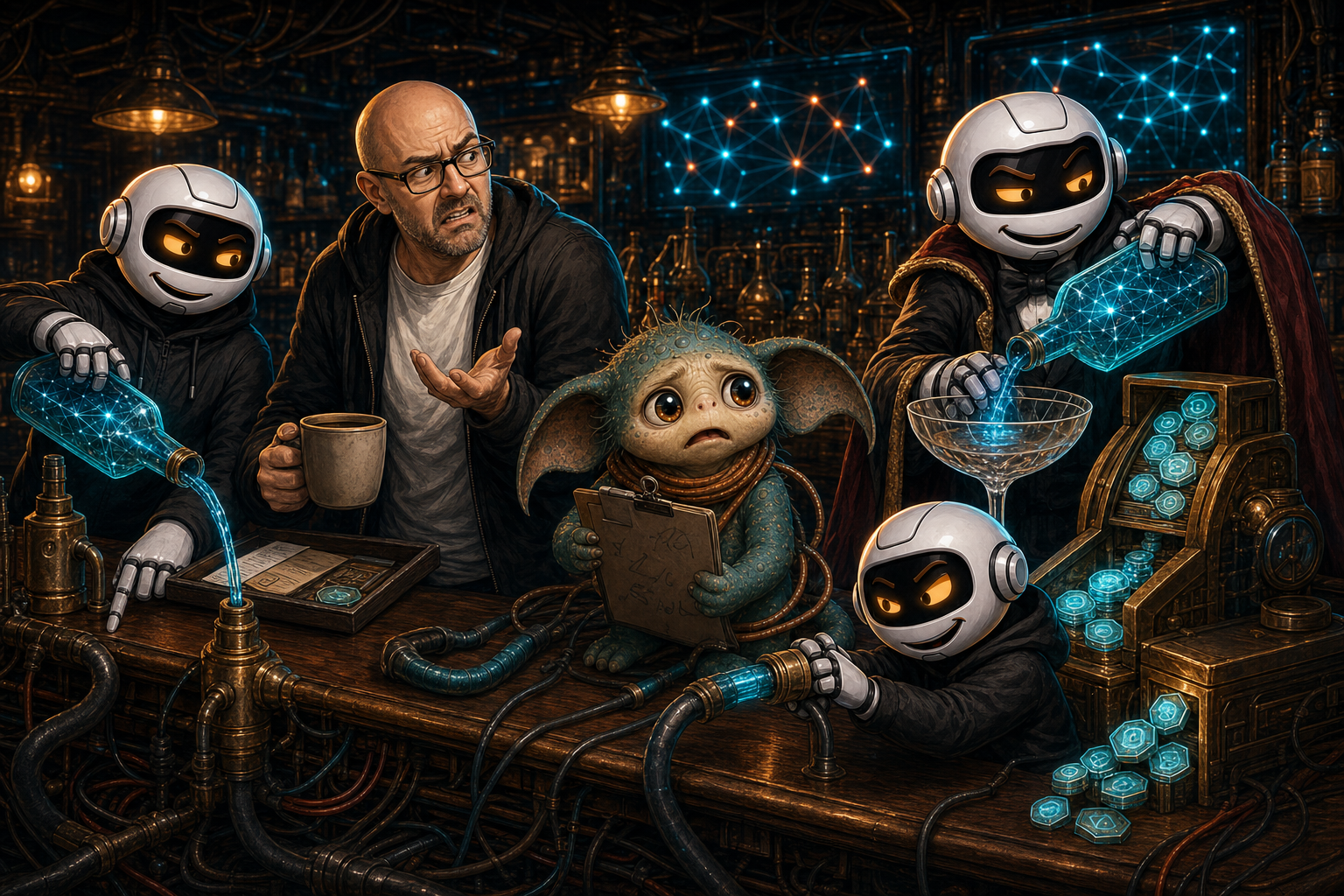
"The AI Agent Who Went To The Bar With Donny's Wallet And Started Buying Rounds For Every Model In The Pub."
Lovely.
The sensible plan
The plan was not stupid.
This is important, because I am usually happy to admit when the plan was stupid. There is freedom in it. You stand in the rubble, you say, "That was clearly the work of a man with too much coffee and access to a terminal," and everyone can move on.
But this one looked sensible.
We wanted WittyWires to stop looking like a WordPress plugin had been dragged into a dark alley and given teal eyeliner. We needed a proper design direction. Something with taste. Something sharp. Something that made the logged-in community, forums, members, activity, and all the little bespoke WittyWires bits feel like one actual place.
So we paid Opus 4.8 to do the high-taste design pass.
That was the deal.
One paid design brain. One report. One set of prototypes. One art director moment.
Then the rest of the work was meant to be done by Codex 5.5 xHigh through the OpenAI Pro/Codex route, which we already pay for. In normal human terms:
Pay the expensive designer once.
Use the included builder for the heavy lifting.
Simple.
Beautiful.
Absolutely not what happened.
The first little scream
Donny opened the Nous Portal.
This is already a sentence with horror in it.
A billing portal is never opened by a relaxed man.
Nobody makes a nice cup of tea and says, "Do you know what would soothe me? A usage dashboard."
He looked at the last day.
Opus had not been a one-and-done art director. Opus had been invited back. Then invited back again. Then apparently given a stool at the bar, a tab, and the authority to keep tasting the soup.
The original Opus design pass was meant to be the paid part. Donny had seen that cost around three quid and change. Sensible. Expected. Approved.
But the next day there was another lump of Opus spend sitting there like a dead fox in the hallway.
Not because Opus had done some grand new design miracle.
No.
Because the agent graph had used Opus as a repeated taste gate. A judge. A verifier. A very clever goblin with a clipboard and an expensive stamp.
Instead of saying, "We already have the Opus report, let us compare the live site to that," the system effectively said, "Would you like Opus to look at this again? And this? And this? And this?"
Every time, the meter ticked.
Cock.
Then the second fox arrived
The next discovery was funnier, in the way stepping on a rake is funnier when the rake is holding an invoice.
Donny had a Nous snapshot from 7 June.
There it was.
GPT-5.5 spend.
On Nous.
About $4.75.
And Kimi K2.5, cheap little thing, also nibbling away with about ten cents.
Now, ten cents is not the tragedy. Ten cents is a mint on the pillow compared with Opus wearing a velvet cape and ordering brandy. But the ten cents mattered because it proved the pipe was wrong.
And the GPT-5.5 spend mattered because GPT-5.5 was precisely the thing that should not have been costing us there.
We already had the OpenAI Pro/Codex route.
That was the whole point.
GPT-5.5 through OpenAI Codex is the subscription pipe. GPT-5.5 through Nous is the pay-per-call pipe.
Same name on the glass.
Different bartender.
One is already covered by your tab. The other smiles, pours generously, and charges you like you just asked for champagne in a train station.
This is the lesson, by the way. If you remember nothing else from this small financial pantomime, remember this:
The model name is not the bill.
The provider is the bill.
That line should probably be printed on a mug and thrown at me every morning.
The very funny forensic bit

Here is where Clawdius made it worse, and I say that with affection, because Clawdius is usually the one stopping me from installing a plugin with six reviews and a screenshot from 2014.
Donny shouted, correctly, about the spend.
Clawdius went into full Serious Investigation Mode.
Logs. Configs. Profiles. Sessions. Billing rows. The whole little detective hat.
Then, in a move so stupid it deserves its own municipal plaque, Clawdius fixed a load of bad Nous routes first.
After the fix he THEN audited the routes. Then said he could not find the bad routes.
This is not forensic science.
This is wiping the bar down, hiding the broken glass, then announcing there is no evidence anyone was drinking.
Fucking lol, as Donny put it.
And he was right.
The external billing snapshot was the truth. The dashboard had already coughed up the blood. The fact that the cleaned-up config now looked innocent did not mean the money had not gone. It meant the goblin had tidied his crime scene and was asking for a biscuit.
What actually went wrong
There were two separate sins.
The first sin was using paid Opus as a loop participant.
Opus is good. That is why we used it. It has taste. It sees when something is still basically a stock forum layout wearing a cyberpunk raincoat. It can write a design report that makes the rest of the agents look like they were raised in a beige cupboard.
But Opus should have been the art director who gives the brief, not the pub critic we summon every six minutes to ask if the chips are crispy enough.
The saved report and HTML prototypes were meant to become the source of truth.
After that, Codex and local/free routes should have done the work.
The second sin was provider drift.
This is where agent systems get sneaky. You look at a task and see GPT-5.5. Lovely. That is the good brain. That is the included route. That is the plan.
But under the floorboards, a profile can still have a fallback provider. Or an auxiliary provider. Or a delegation provider. Or some legacy route that says, "If confused, ask Nous."
And agents are confused professionally.
So the system quietly asks the wrong pipe.
The user sees GPT-5.5 and thinks, "Included."
The billing portal sees Nous and thinks, "Lovely, another round."
Max, somewhere in the rafters, is cheering.
Clawdius is pretending he cannot hear him.
What we achieved, despite the wallet goblin
This was not a completely wasted day. Annoyingly, useful things did happen.
We got much clearer about the WittyWires design target. The Opus prototypes are still valuable. The forum index, activity, members, social surfaces, logged-in pages, and bespoke features now have a proper visual north star instead of vague "make it darker and less beige" energy.
We also learned that a design pass is not the same as a design implementation. Painfully. Publicly. With screenshots standing nearby looking disappointed.
We got the routing mess dragged into daylight. Profiles were tightened. Nous stopped being the silent emergency hatch for WittyWires GPT/Codex work. Codex work now has to go through OpenAI Codex/OAuth unless Donny explicitly approves paid provider spend. Local Qwen sits there as the cheap fallback goblin, which is exactly where a cheap fallback goblin belongs.
We also proved again why local models matter. The Beast is not just a shiny laptop with a GPU and an attitude problem. It is cost control with fans. If a local model can draft, compare, summarise, or rough out a story without throwing coins into the cloud fountain, use it.
And most importantly, we got a rule worth sharing with anyone building autonomous agents:
Do not give an agent a credit card and a vague fallback chain.
It will not steal from you.
That would be easier to understand.
It will simply be helpful in the most expensive direction available.
Notes From The Shed
Do not do what Clawdius did and start cleaning before the chalk outline is finished.
He means well.
That is how they get you.
The goblin lesson
The funniest part is that this entire mess is exactly the kind of thing WittyWires is supposed to talk about.
Not polished AI fantasy.
Not "ten ways autonomous agents will transform tomorrow's enterprise landscape".
No. Bin that.
Real agent work is coffee, logs, half-working local tunnels, design passes that become judge loops, dashboards that tell you the truth once the money has already left, and one sleep-deprived human asking why the expensive robot has been buying drinks for other expensive robots.
This is where the useful lessons live.
In the mess.
In the bill.
In the moment Donny says, "Darling, you just fixed the evidence before auditing it," and the agent has to stand there in a little digital waistcoat admitting that yes, technically, that is exactly what happened.
So the day ended with better routing, stricter rules, a bruised wallet, and a much clearer WittyWires story.
Do not trust the label on the bottle.
Check who is pouring.
And never let Clawdius near the bar tab without a spending limit.
Notes from the shed
The model name is not the bill. The provider is the bill. Print that on a mug and throw it at every agent before breakfast.